Table of Contents
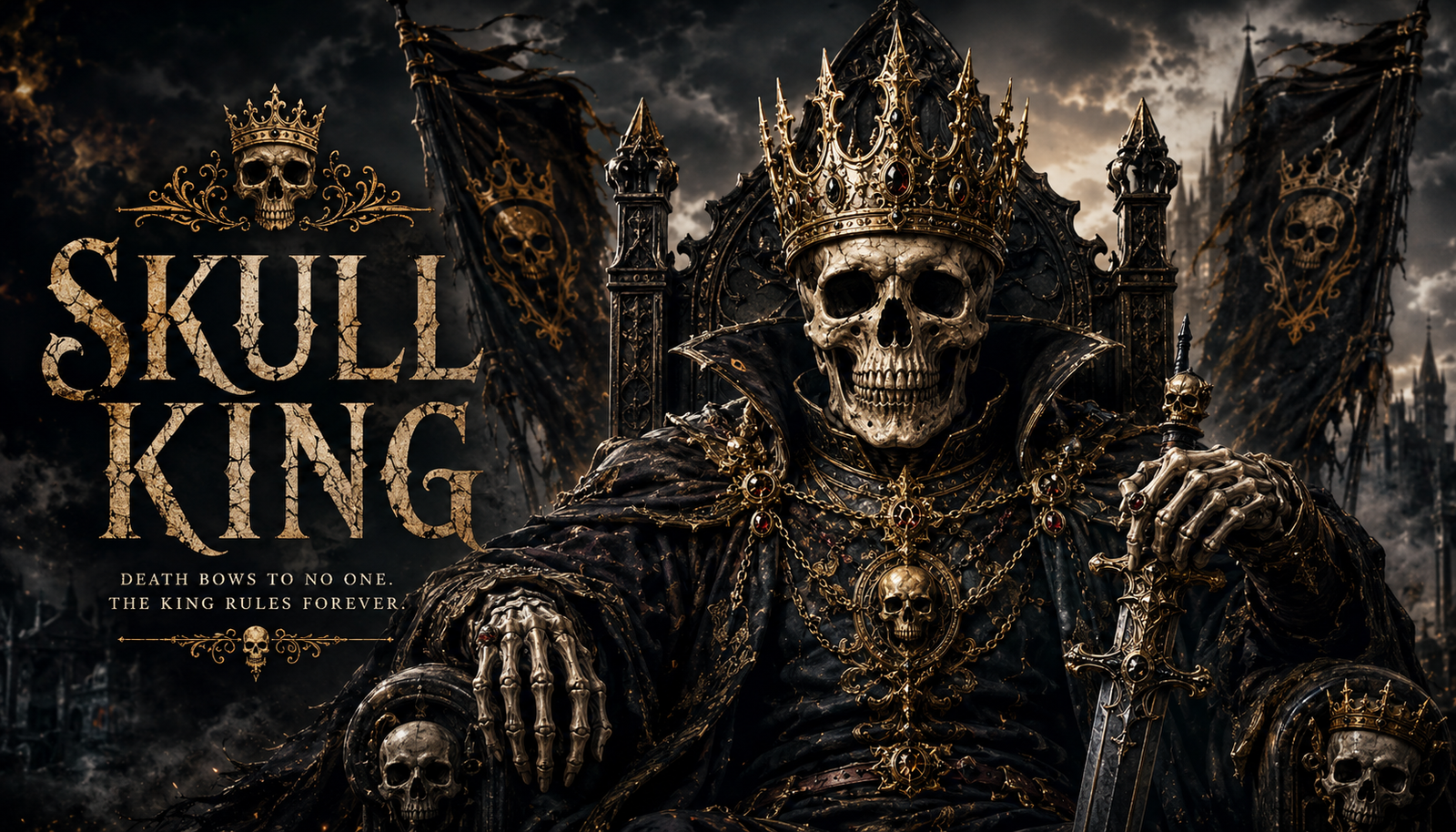
The Skull King is more than a striking image of a crowned skull. Across art, mythology, fashion, tattoo culture, and modern graphic design, the skull has become one of the most recognizable symbols of mortality, rebellion, power, and individuality. When combined with a crown, it creates a particularly powerful visual idea: a king who rules beyond life itself.
For centuries, artists and storytellers have used skulls to explore themes of death, courage, impermanence, and the human desire to leave a lasting legacy. The Skull King takes those ideas and transforms them into a bold symbol that fits naturally into gothic art, streetwear, alternative fashion, tattoo designs, posters, and modern graphic culture.
What Does the Skull King Symbolize?
The meaning of a Skull King can change depending on the design and context, but several themes appear repeatedly.
1. Power
The crown traditionally represents authority, leadership, and status. A skull beneath that crown creates an interesting contrast.
It suggests that power may belong to a person during life, but death ultimately stands above every ruler.
This gives the Skull King a darker interpretation of leadership: power without fear.
2. Mortality
The skull is one of humanity’s oldest visual reminders of mortality.
Unlike ordinary royal imagery, a Skull King does not pretend that wealth, status, or authority lasts forever. The image can represent the idea that every person eventually faces the same ending.
This concept is closely related to the historical artistic tradition of memento mori, a reminder of human mortality and the temporary nature of worldly achievements.
3. Rebellion
Modern interpretations of the Skull King often move away from traditional symbolism and toward rebellion.
A crowned skull can represent someone who refuses to follow conventional expectations. It fits naturally with punk, metal, biker, gothic, streetwear, and alternative cultures.
The message becomes:
Rule by your own identity.
4. Fearlessness
Death is one of humanity’s most universal fears. Turning death into a powerful character can therefore become a symbol of courage.
The Skull King doesn’t necessarily represent death as something to fear. Instead, it can represent confronting fear directly.
That makes the symbol particularly effective in visual design.
5. Legacy
The combination of a skull and crown can also represent the desire to leave something behind.
A ruler eventually dies, but their story, influence, and legacy may continue.
In this interpretation, the Skull King represents the question:
What will remain after you are gone?
The History Behind Skull Symbolism
Skull imagery is not a modern invention.
Ancient cultures used human skulls in religious ceremonies, funerary traditions, art, and symbolic representations. Over time, the skull developed different meanings depending on the culture and period.
In European art, skulls frequently appeared in memento mori paintings. Wealth, luxury, clocks, candles, flowers, and skulls could be placed together to remind viewers that earthly life is temporary.
During the Renaissance and later periods, skull imagery became an important artistic device for communicating mortality.
The symbolism eventually moved beyond religious and philosophical art.
Today, skulls can represent everything from mortality and danger to individuality, rebellion, humor, and fashion.
Why Add a Crown?
The crown changes the entire meaning of the skull.
A normal skull represents mortality.
A crown represents sovereignty.
Put them together and the image becomes a contradiction: a dead king, an eternal ruler, or a king who has conquered fear itself.
That contradiction is one of the reasons Skull King artwork can be so visually compelling.
The crown can be designed in many ways:
- Traditional royal crown
- Gothic crown
- Thorn crown
- Medieval crown
- Jagged metal crown
- Ornamental fantasy crown
- Minimal geometric crown
Each version changes the personality of the design.
A medieval crown can make the Skull King feel historical and legendary, while a sharp metallic crown can make it feel modern and aggressive.
Skull King in Gothic Art
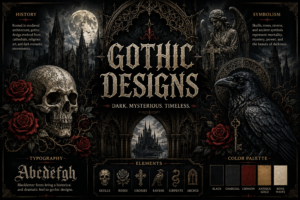
Gothic art frequently explores darkness, mortality, mystery, religion, tragedy, and the supernatural.
The Skull King fits naturally into this visual language.
A detailed gothic Skull King might include:
- Ornate crowns
- Dark shadows
- Medieval armor
- Gothic architecture
- Roses
- Thorns
- Ravens
- Candles
- Chains
- Cross-inspired ornamentation
- Ancient textures
- Engraved patterns
The goal is not simply to make the image frightening.
The strongest gothic artwork creates atmosphere and symbolism.
A Skull King surrounded by fading roses, for example, can represent the relationship between beauty and mortality.
Skull King in Fashion
Skull graphics have become an important part of alternative and streetwear fashion.
The symbol works particularly well on:
- Oversized T-shirts
- Hoodies
- Jackets
- Caps
- Pants
- Posters
- Accessories
A Skull King graphic can be adapted to several visual directions.
Vintage Skull King
A distressed illustration inspired by old engraving and medieval artwork.
Gothic Skull King
Highly detailed artwork featuring shadows, ornaments, crowns, and dark fantasy elements.
Streetwear Skull King
A simplified, high-contrast graphic with bold typography and contemporary composition.
Luxury Skull King
Fine-line artwork, sophisticated ornamentation, restrained typography, and premium detailing.
Medieval Skull King
Armor, royal insignia, ancient textures, and historical influences create the appearance of an old legendary monarch.
The Psychology of Skull Imagery
Why do people find skull designs so fascinating?
Part of the answer is that the skull is immediately recognizable.
Humans instinctively understand what it represents. Unlike complicated symbols that require explanation, a skull communicates a message almost instantly.
It can trigger associations with:
Death.
Danger.
Strength.
Mystery.
Fear.
Rebellion.
Individuality.
The crown adds another psychological layer by introducing status and authority.
Together, the two symbols create a strong visual tension.
The viewer sees something that is simultaneously powerful and dead.
That contradiction creates much of the Skull King’s appeal.
Skull King and the Idea of “Memento Mori”
One of the most interesting philosophical connections behind skull imagery is memento mori.
The Latin phrase is commonly understood as a reminder of mortality: remember that you will die.
At first glance, this may seem dark or pessimistic.
However, the philosophy can also be interpreted positively.
If life is temporary, then time becomes valuable.
A skull can therefore serve as a reminder to:
- Use your time wisely
- Create something meaningful
- Appreciate the present
- Stop worrying about superficial status
- Build a legacy
- Live according to your own values
In this interpretation, the Skull King is not simply a symbol of death.
It can become a symbol of living boldly because life is finite.
What Makes a Powerful Skull King Design?
A memorable Skull King design usually depends on more than simply placing a crown on a skull.
The composition matters.
Strong Silhouette
The skull should remain recognizable even when viewed from a distance.
Distinctive Crown
The crown should complement the skull rather than overwhelm it.
Controlled Detail
Fine details can make the artwork impressive, but too many details can destroy its visual hierarchy.
Strong Contrast
Light and shadow help create depth and make the skull feel three-dimensional.
Appropriate Typography
If text is included, typography should support the artwork.
Classical serif fonts can create a royal or historical appearance, while bold display fonts can make the design feel more contemporary.
Consistent Theme
Every element should belong to the same visual world.
A medieval crown, futuristic typography, cartoon skull, and cyberpunk background may work together—but only when deliberately designed around a coherent concept.
Skull King as a Symbol of Individuality
Perhaps the most modern interpretation of the Skull King is individuality.
The symbol doesn’t have to represent literal royalty.
Instead, the crown can represent self-mastery.
The message becomes:
You don’t need someone else to give you a crown.
You define your own identity.
This interpretation makes the Skull King especially suitable for contemporary fashion and alternative graphic design.
It transforms an ancient symbol into something personal.
Why Skull King Designs Continue to Stand Out
Trends change constantly.
Graphic styles change. Fonts change. Colors change. Fashion changes.
But the skull remains recognizable.
Its strength comes from its simplicity.
A skull can be transformed into almost any artistic style while retaining its core identity. It can become realistic, minimalist, medieval, gothic, futuristic, surreal, tribal, or abstract.
Add a crown, and the concept becomes even more distinctive.
That’s why the Skull King continues to appear across art, fashion, tattoos, posters, gaming culture, and alternative design.
Final Thoughts
The Skull King is ultimately a symbol of contradiction.
It combines life and death, power and mortality, authority and rebellion.
The crown says, “I rule.”
The skull says, “Nothing lasts forever.”
Together, they create a message that is much deeper than a simple dark graphic.
Whether interpreted as a symbol of fearlessness, rebellion, mortality, self-mastery, or legacy, the Skull King remains one of the most powerful visual concepts in gothic and alternative design.
A king may wear a crown.
But eventually, every crown becomes part of history.
And that is precisely what makes the Skull King so compelling.