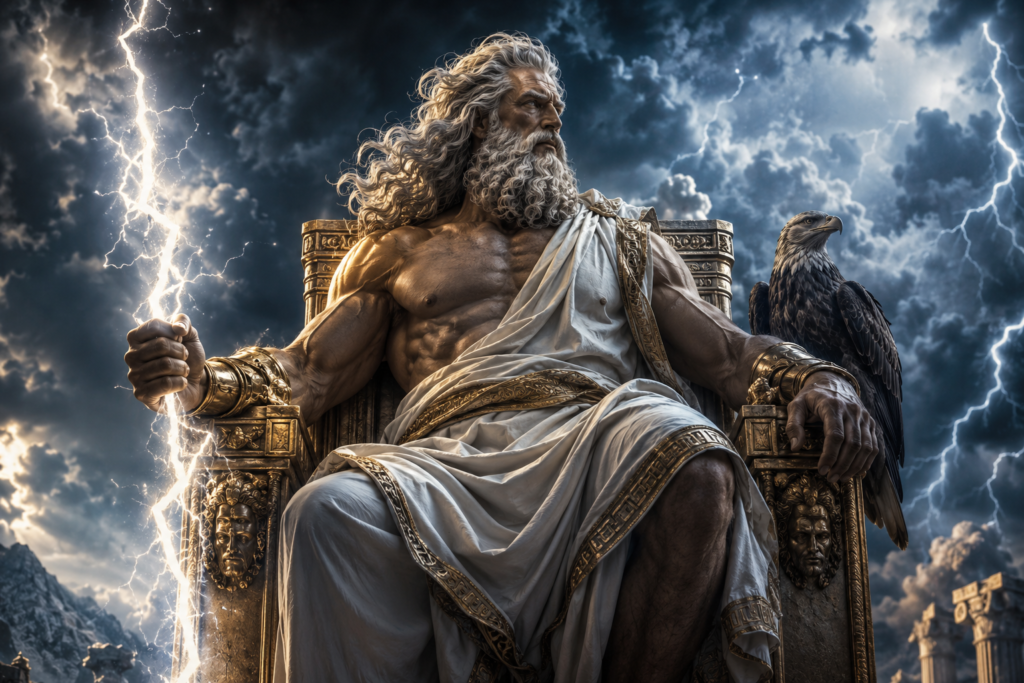
Few figures from ancient Greek mythology have remained as recognizable as Zeus.
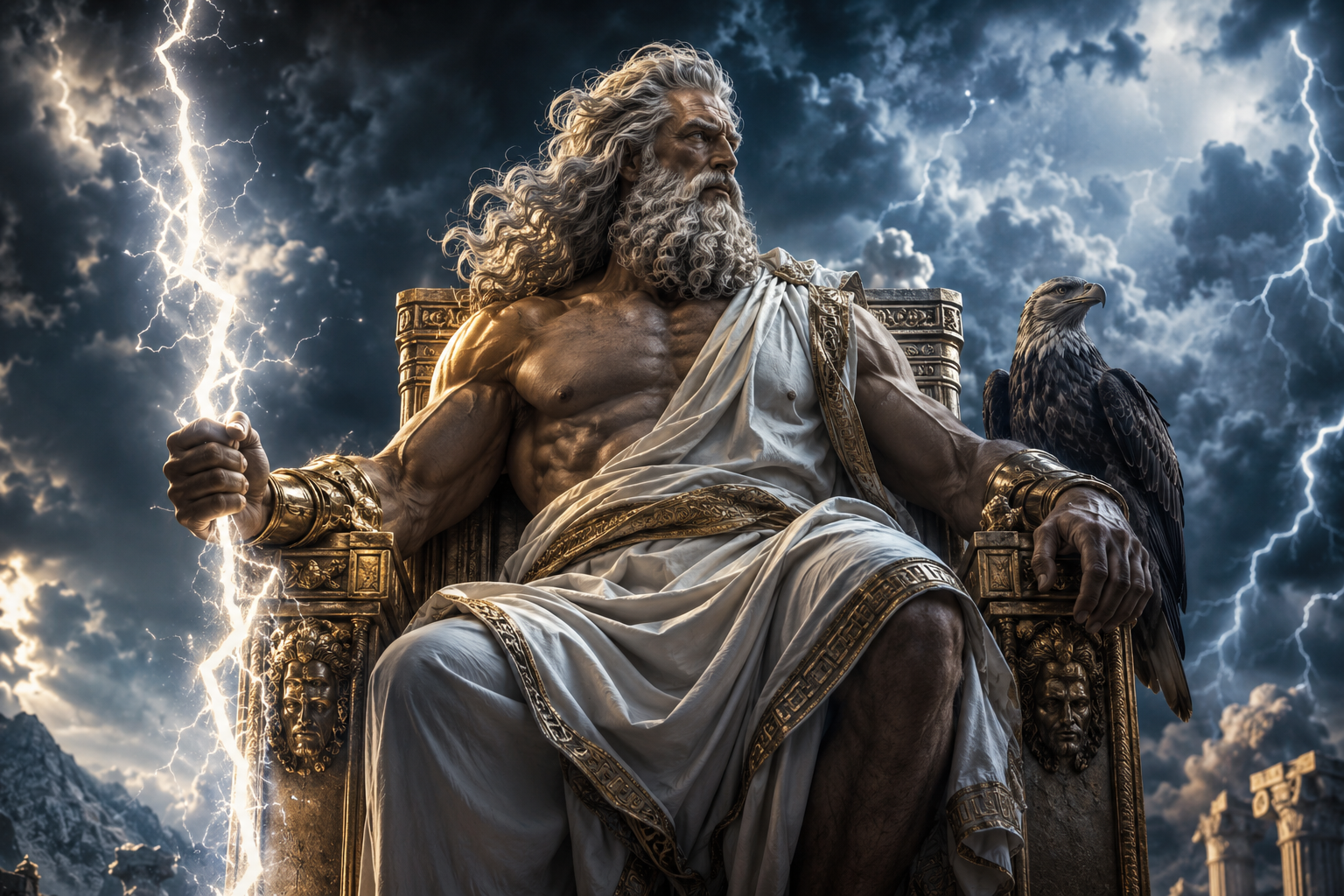
The thunderbolt in his hand. The eagle beside him. The imposing figure seated among the gods of Mount Olympus.
For thousands of years, Zeus has represented something larger than a storm god. In Greek religious and literary traditions, he was associated not only with the sky and weather, but also with kingship, law, justice, oaths, hospitality and political order.
That combination is part of what makes Zeus such a compelling figure today. He isn’t remembered simply because he could throw lightning. His mythology connects natural power with authority, responsibility and the complicated behavior of a ruler.
At TOHOOD, that’s exactly the kind of story we find worth putting on clothing: not an image chosen simply because it looks powerful, but a symbol with a history behind it.
Who Was Zeus?
Zeus was the principal god of the Olympian pantheon in ancient Greek religious tradition.
He was traditionally described as the son of the Titans Cronus and Rhea and the brother of Hera, Poseidon, Hades, Demeter and Hestia. In later mythological traditions, Zeus becomes the ruler of the Olympian gods and is strongly associated with the sky, thunder, lightning and divine authority.
Ancient literary traditions are not a single, perfectly consistent storybook. Greek mythology developed across centuries, regions and genres. Homer, Hesiod, the Homeric Hymns and later authors sometimes emphasize different aspects of the gods.
That matters when talking about Zeus.
Rather than thinking of Greek mythology as one definitive canon, it is more accurate to think of it as a large body of stories, religious traditions and literary works that developed over time.
The ancient sources most frequently used when reconstructing Zeus’s mythology include Homer and Hesiod, while later writers and mythographers added their own versions and interpretations.
Zeus and the Titans
One of the most famous parts of Zeus’s mythology begins before the Olympians ruled the cosmos.
Cronus, one of the Titans, feared a prophecy that one of his own children would eventually overthrow him. According to the myth, he swallowed his children as they were born.
Rhea eventually protected Zeus by concealing the infant and giving Cronus a substitute to swallow instead.
Traditions differ on details surrounding Zeus’s upbringing, including where he was raised. Crete is especially important in several ancient accounts, although different traditions existed.
Eventually, Zeus returned and challenged the existing order.
The conflict between Zeus and the Titans became part of the mythological explanation for the transition from the older Titan generation to the Olympian gods.
This is one reason Zeus’s mythology is so closely connected with rulership.
He isn’t simply born into power.
His mythology is structured around a struggle over who has the right to rule.
Why Is Zeus Associated With Lightning?
The thunderbolt is probably the most recognizable symbol associated with Zeus.
In Greek mythology and art, the thunderbolt represents his control over the forces of the sky.
But its significance goes beyond visual drama.
The weapon communicates authority.
A ruler holding a thunderbolt is not simply holding a weapon. The image suggests that the god possesses a force capable of affecting the natural world itself.
The Metropolitan Museum of Art notes that Zeus’s characteristic weapon was the thunderbolt and uses this attribute to distinguish Zeus from his brother Poseidon in an ancient Greek bronze depicting a mature bearded male deity.
This is an important distinction.
Poseidon carries a trident.
Zeus carries the thunderbolt.
Those objects became visual shorthand for their identities.
The Thunderbolt as a Symbol of Power
The thunderbolt is one of the reasons Zeus remains visually powerful in modern design.
A lightning bolt is instantly understandable.
It communicates:
- power
- speed
- force
- danger
- authority
- energy
- transformation
But the historical association with Zeus gives the symbol another layer.
The lightning bolt isn’t merely an aggressive graphic.
It represents divine authority in a mythology where Zeus is portrayed as the highest-ranking Olympian deity.
That makes it particularly suitable for visual storytelling.
Zeus and Mount Olympus
Mount Olympus occupies a special place in Greek mythology.
In literary traditions, Olympus is the home of the Olympian gods.
Zeus is portrayed as their ruler.
The important point is that Olympus should not be understood simply as a modern fantasy castle floating in the clouds. Its significance comes from the way Greek literature and religion imagined the relationship between divine beings and the human world.
The mountain became a powerful symbolic boundary:
human world below — divine world above.
Zeus’s position at the center of Olympus reinforces his role as a cosmic and political ruler.
Zeus Was More Than a Storm God
Calling Zeus simply “the Greek god of thunder” is convenient, but incomplete.
His traditional roles were considerably broader.
He was associated with:
- the sky
- weather
- kingship
- law
- justice
- oaths
- hospitality
- political authority
- protection of social order
Theoi’s compilation of classical references describes Zeus through multiple epithets and roles connected with law, order, kingship, hospitality and the protection of suppliants.
This broader picture changes how we understand his mythology.
Thunder is the visual language.
Authority is the larger theme.
Zeus and the Eagle
Another major symbol of Zeus is the eagle.
In Greek and later classical art, the eagle became closely associated with Zeus.
Why an eagle?
The answer is partly visual.
An eagle flies above the ground, has exceptional physical power and was naturally suited to representing a deity associated with the sky.
Over time, the eagle became part of Zeus’s recognizable iconography alongside the thunderbolt and royal imagery.
This is an excellent example of how ancient symbolism works.
A symbol doesn’t always need an elaborate explanation.
Sometimes its physical characteristics already make the connection intuitive.
Zeus and the Oak
Zeus was also associated with the oak.
The sanctuary at Dodona, for example, was an important center of Zeus worship, and the sacred oak played a central role in its religious traditions.
This is a useful reminder that Zeus was not only a literary character.
People in the ancient Greek world actually worshipped Zeus.
There were sanctuaries, rituals, offerings and regional traditions associated with him.
That distinction is important when discussing mythology responsibly.
Myths are stories, but Greek gods also belonged to lived religious systems.
Zeus as a Symbol of Kingship
Perhaps the most interesting aspect of Zeus for modern audiences is his relationship with kingship.
Ancient Greek societies were politically diverse, and there was never one uniform “Greek government.”
Nevertheless, Zeus could be represented as a divine ruler and protector of order.
His mythology therefore connects several types of power:
natural power → divine power → political authority.
That connection explains why Zeus appears so frequently in ancient art.
A powerful god could also function as a visual representation of legitimate authority.
Zeus Was Not a Perfect Hero
Modern superhero stories often divide characters into heroes and villains.
Greek mythology doesn’t work that neatly.
Zeus is powerful, but he is also deeply flawed.
His relationships, decisions and conflicts often create problems for both gods and mortals.
Stories about Zeus can involve jealousy, deception, desire, punishment and conflict.
That complexity is part of what makes ancient mythology interesting.
The gods are not always moral examples.
They often embody the contradictions of the human world.
Zeus represents authority, but authority itself can be dangerous when it is unchecked.
That tension makes him a much more interesting character than a simple “good god of lightning.”
Zeus in Ancient Greek Art
Zeus appeared in sculpture, pottery, coins and other forms of ancient art.
Artists developed recognizable conventions for representing him.
He is frequently shown as a mature, powerful male figure, often bearded, with attributes such as the thunderbolt, eagle or royal scepter.
The Metropolitan Museum’s ancient bronze figure of Zeus or Poseidon demonstrates how important these attributes were for identifying divine figures in Greek art.
This is where mythology becomes especially relevant to fashion.
Ancient Greek artists were already creating visual identities for gods.
They used:
pose + object + clothing + symbol + composition
to communicate identity.
Modern graphic design does something surprisingly similar.
A symbol, silhouette or object can communicate an entire story before the viewer reads a single word.
Why Zeus Still Influences Modern Culture
Zeus has survived because the ideas associated with him remain visually and emotionally powerful.
Lightning is still associated with energy.
Storms still represent uncontrollable natural power.
Crowns still represent authority.
Eagles still communicate strength and dominance.
And mythology continues to provide designers with a visual vocabulary that feels older and deeper than ordinary graphic decoration.
That doesn’t mean modern interpretations are identical to ancient ones.
They aren’t.
A contemporary designer may use Zeus to communicate confidence, rebellion, strength or identity in a way that would have been completely foreign to an ancient worshipper.
But that transformation is part of the story.
Symbols evolve.
Zeus and Modern Streetwear
Streetwear has always been interested in symbols.
Logos.
Animals.
Weapons.
Religious imagery.
Historical figures.
Typography.
Flags.
Mythological characters.
The appeal is simple: clothing can communicate something about the person wearing it.
A Zeus graphic can therefore work on two levels.
At the surface:
It looks powerful.
Underneath:
It carries a story.
That’s the philosophy behind TOHOOD.
We aren’t interested in treating mythology as a collection of random images.
The goal is to take recognizable stories and symbols and reinterpret them through contemporary clothing.
The Story Behind TOHOOD’s Zeus Design
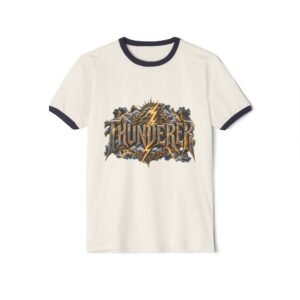
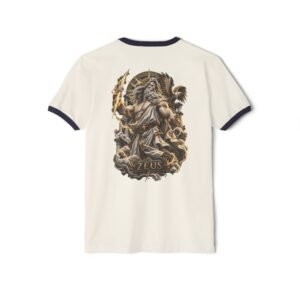
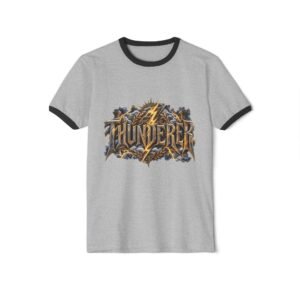
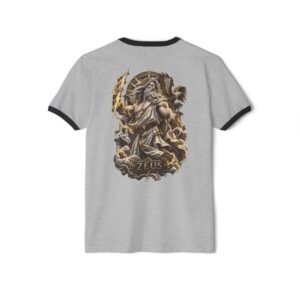
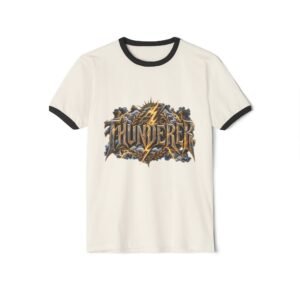
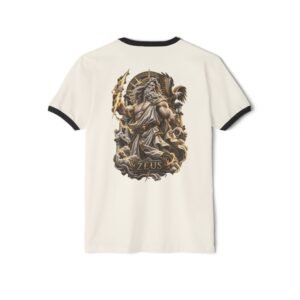
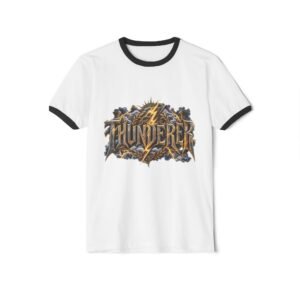
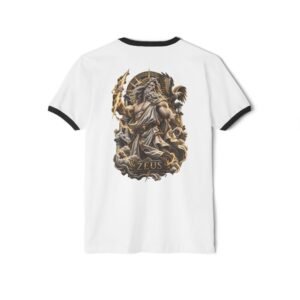
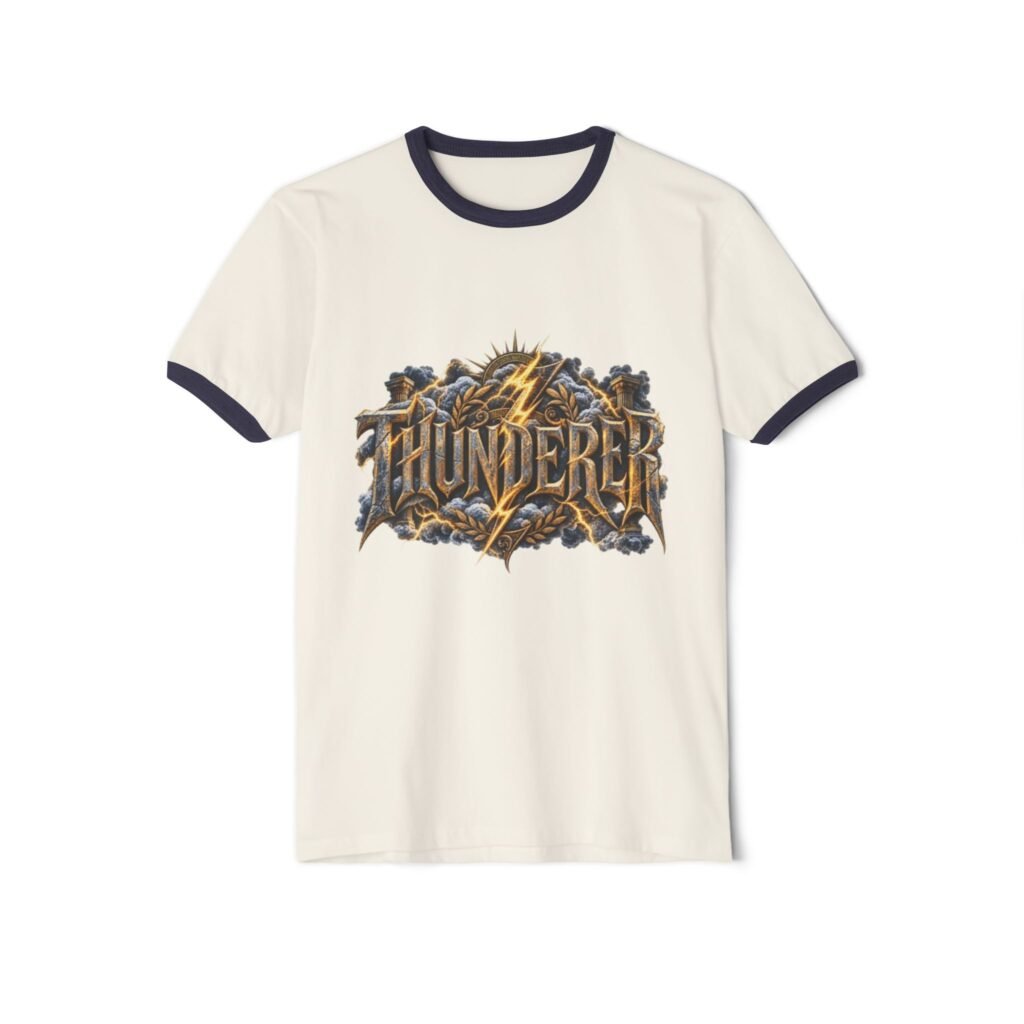
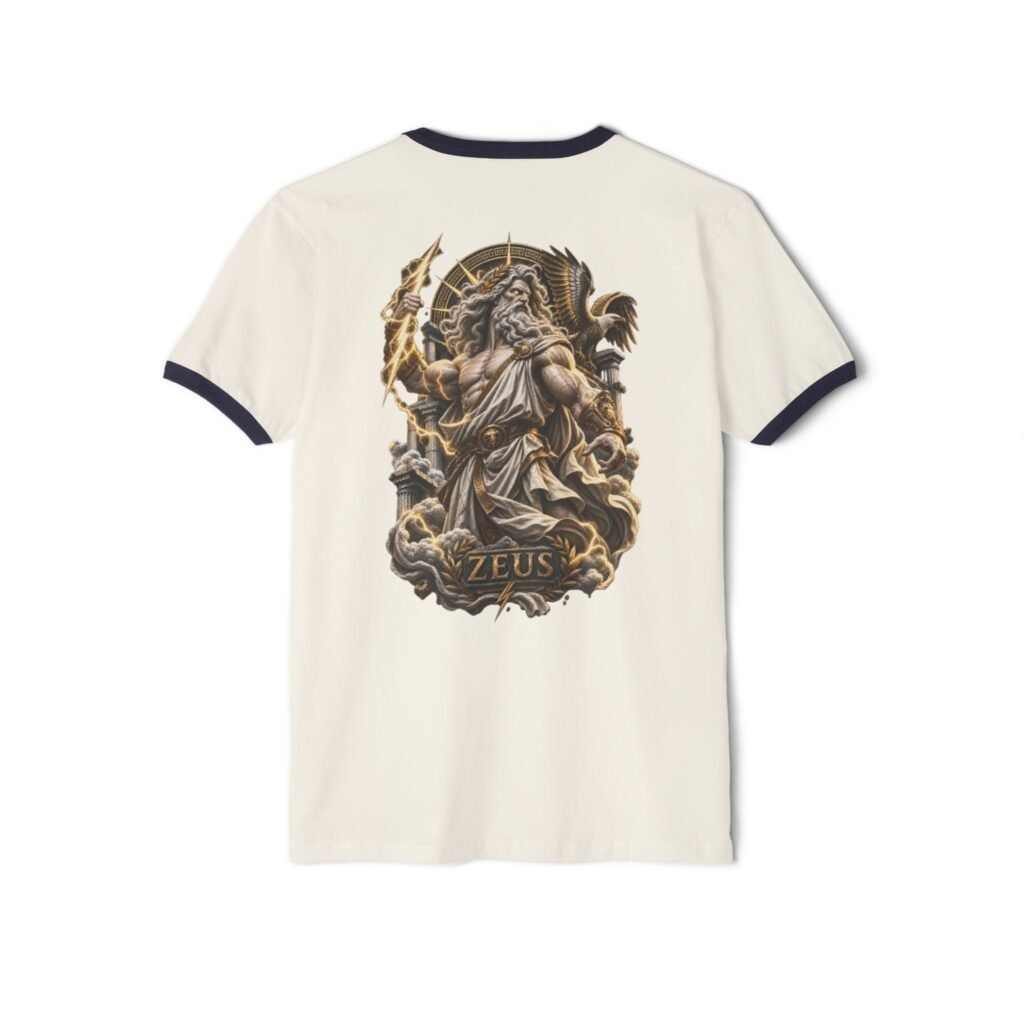
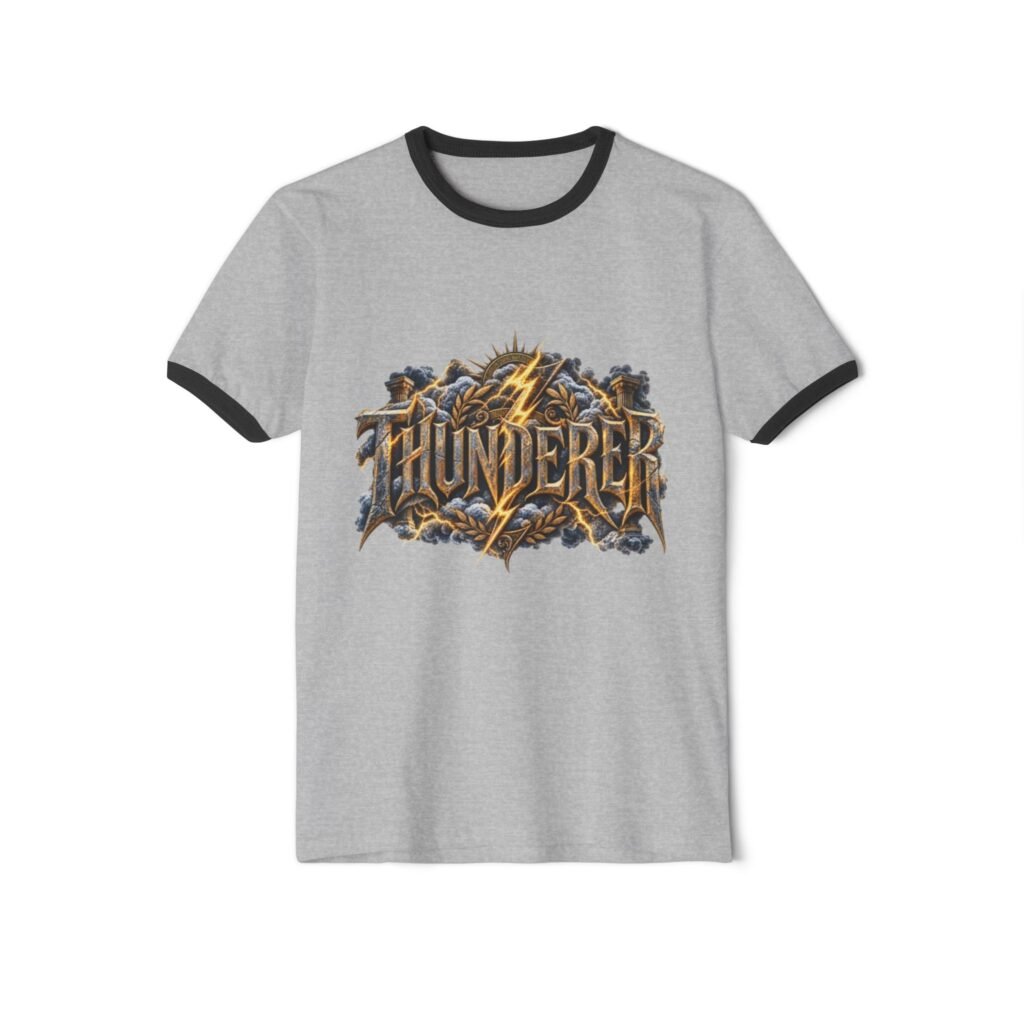
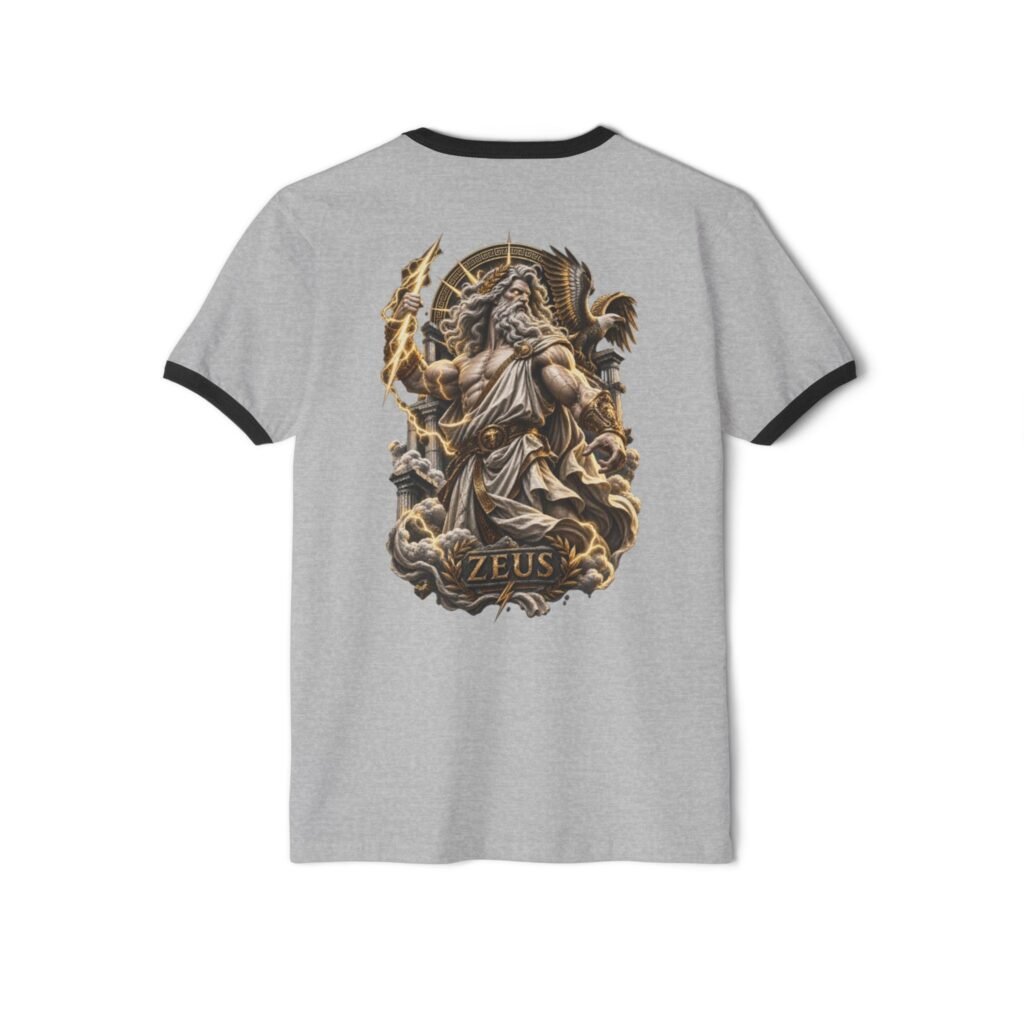
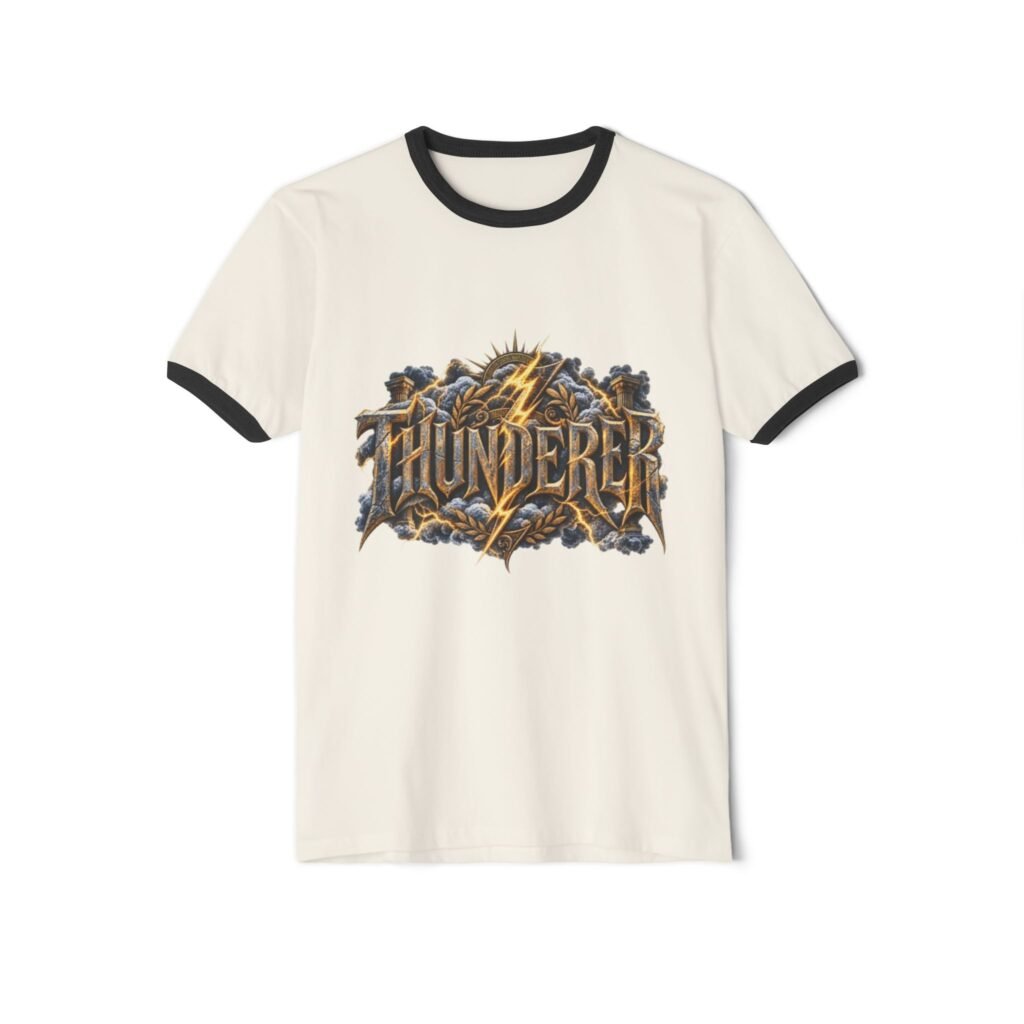
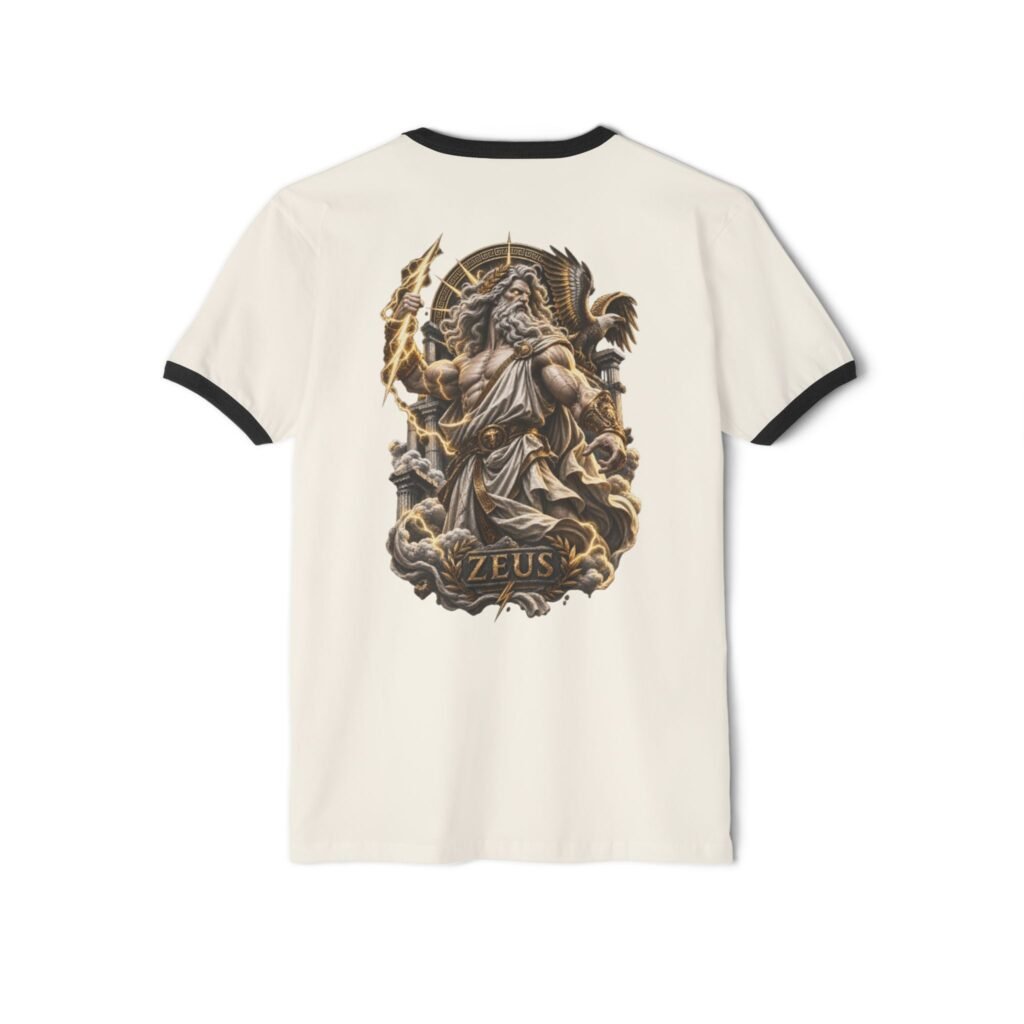
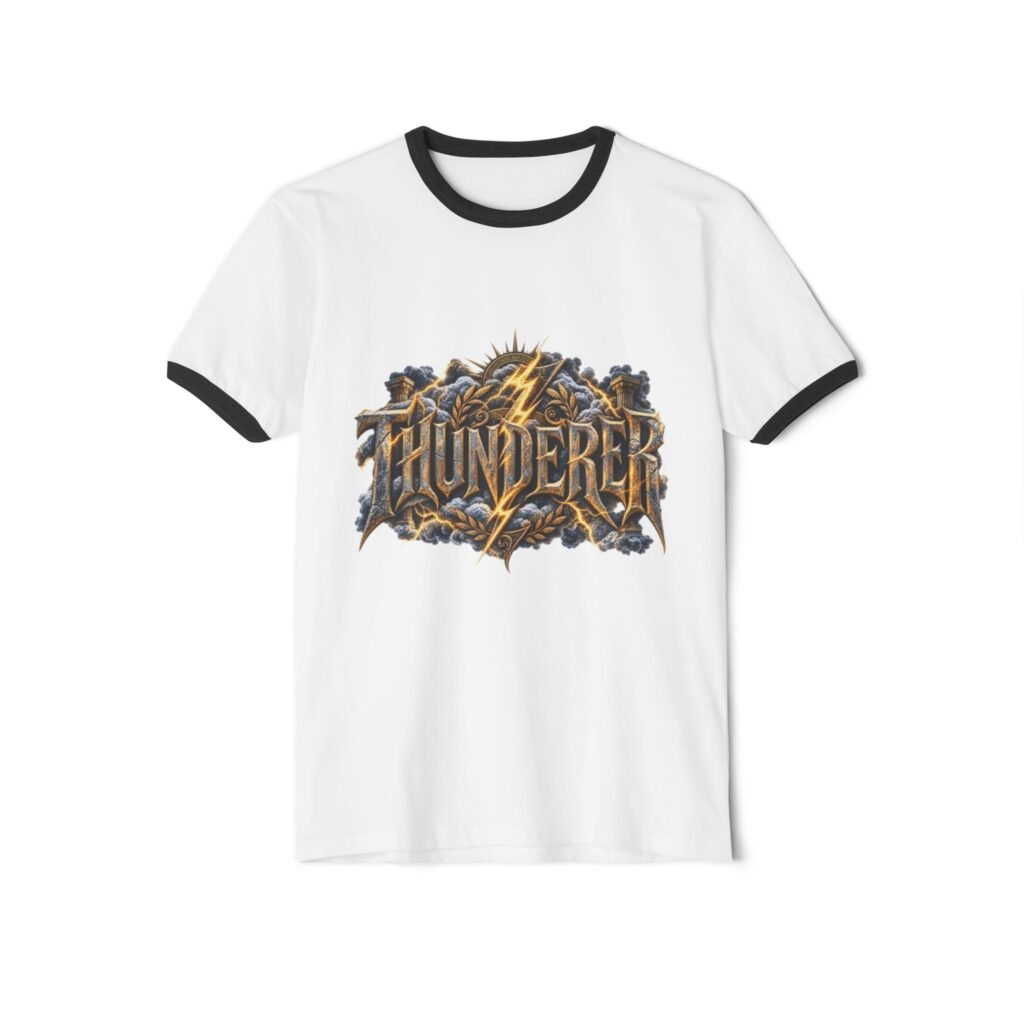
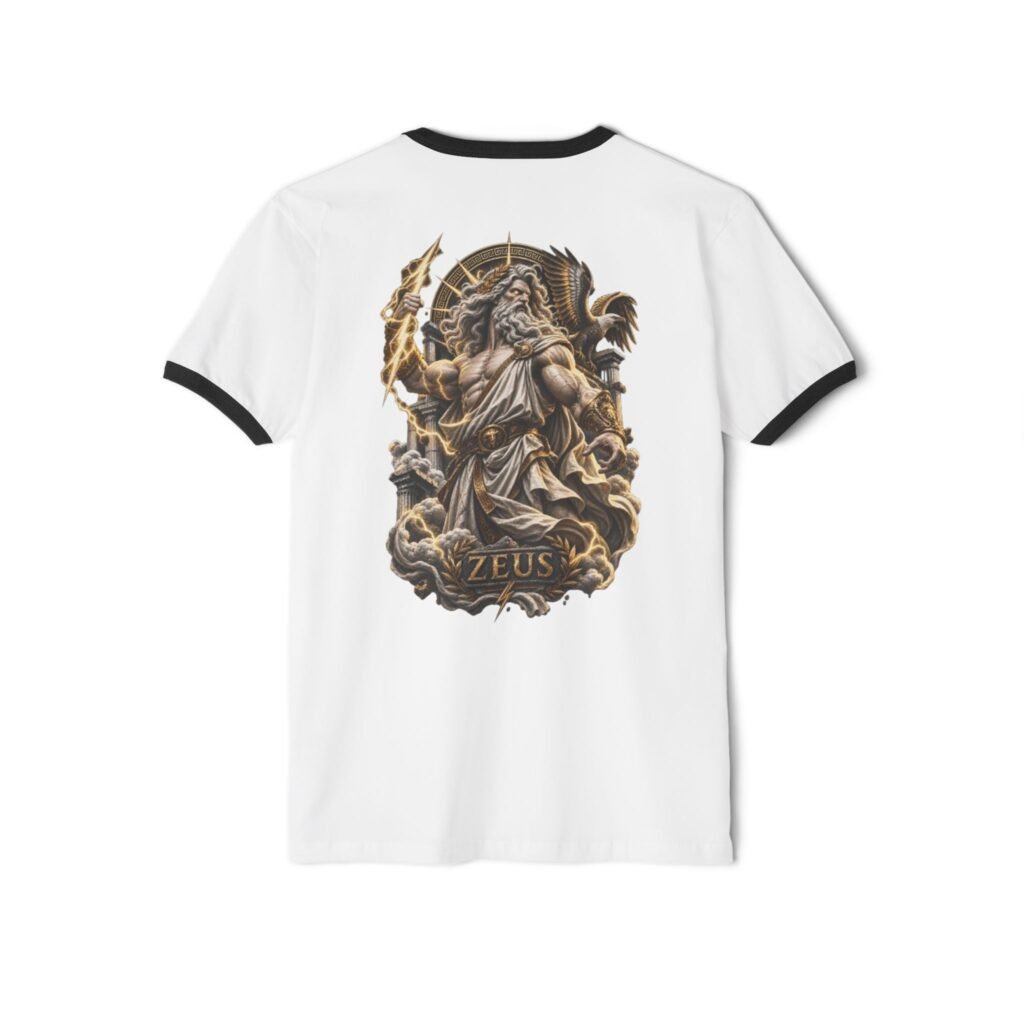
TOHOOD’s Zeus Thunder Ringer T-Shirt takes one of the most recognizable figures in Greek mythology and translates his visual language into modern streetwear.
The thunderbolt becomes the central idea.
The design draws on the association between Zeus and lightning, while the ringer-T-shirt silhouette gives the concept a distinctly contemporary character.
The result isn’t intended to reproduce an ancient artifact.
It is an interpretation.
Ancient mythology provides the source material.
Modern design provides the language.
And the person wearing it becomes part of the story.
What Does Zeus Symbolize?
Depending on context, Zeus can symbolize:
- power
- authority
- leadership
- protection
- law and order
- the force of nature
- kingship
- confidence
- responsibility
- the complexity of power
The important thing is not to reduce Zeus to one meaning.
Symbols become interesting precisely because they can carry multiple interpretations.
Someone might wear a Zeus design because they love Greek mythology.
Someone else might be drawn to the thunderbolt.
Another person might simply connect with the idea of strength and authority.
The symbol leaves room for interpretation.
Frequently Asked Questions
Was Zeus the god of thunder?
Zeus was strongly associated with thunder and lightning, but describing him only as a thunder god leaves out his broader roles. He was also associated with the sky, kingship, law, justice, oaths and social order.
What is Zeus’s most famous symbol?
The thunderbolt is probably Zeus’s most recognizable symbol. The eagle, royal scepter and oak are also associated with him.
Who were Zeus’s parents?
In the major Greek mythological traditions, Zeus was the son of Cronus and Rhea.
Where did Zeus live?
In Homeric tradition, Zeus and the Olympian gods are associated with Mount Olympus. Different local traditions surrounding Zeus existed across the Greek world.
What animal represents Zeus?
The eagle is strongly associated with Zeus in ancient Greek iconography.
Was Zeus a real person?
No historical evidence establishes Zeus as a human historical ruler. Zeus belongs to ancient Greek religious and mythological traditions. However, worship of Zeus was a real part of ancient Greek religious life, with sanctuaries and cult practices dedicated to him.
Why does TOHOOD use mythology in clothing?
TOHOOD uses mythology because symbols can carry stories. The goal is to reinterpret historical and mythological imagery through contemporary streetwear rather than treating ancient symbols as meaningless decoration.
Final Thought
Zeus has survived for more than two millennia not simply because ancient stories were entertaining.
His image condenses enormous ideas into a few recognizable symbols.
A lightning bolt.
An eagle.
A crown.
A powerful figure looking down from Olympus.
Each one communicates something immediately.
But the deeper story is more complicated.
Zeus represents authority, and mythology also asks what happens when authority is imperfect. He represents the power of nature, while humans remain vulnerable to forces they cannot control. He represents kingship, but his stories repeatedly reveal the contradictions of rulers.
That complexity is what keeps mythology alive.
And that is what makes a symbol worth wearing.
Ancient story. Modern form.
Explore the Zeus Thunder Ringer T-Shirt → TOHOOD
Sources & Further Reading
- Homer, Iliad and Odyssey
- Hesiod, Theogony
- Homeric Hymns
- The Metropolitan Museum of Art, Greek and Roman Art collection
- Theoi Project, Zeus reference and classical-source bibliography
Theoi’s Zeus reference identifies Homer, Hesiod, the Homeric Hymns, Herodotus, Apollodorus, Pausanias and other ancient authors among its source material, while The Met provides museum-level evidence for Zeus’s iconography.
About the Author
TOHOOD Editorial Team
TOHOOD’s editorial content explores mythology, ancient cultures, symbolism, art and their influence on contemporary fashion and visual culture. Articles are researched using primary historical texts, museum collections and established reference works. Product-related interpretations are clearly distinguished from historical evidence.