Table of Contents
Gothic design is more than dark colors, skulls, crosses, and dramatic artwork. It is a visual language built around mystery, emotion, history, symbolism, and beauty found in darkness. From medieval cathedrals to modern fashion, tattoos, posters, jewelry, and streetwear, gothic aesthetics continue to influence artists and designers around the world.
Today, gothic designs have evolved far beyond their historical origins. Traditional religious architecture, medieval manuscripts, Victorian fashion, occult symbolism, horror imagery, and modern graphic design can all become part of the gothic visual vocabulary.
What Is Gothic Design?
Gothic design is an artistic style characterized by dramatic visual elements, intricate details, strong symbolism, and an atmosphere of mystery. It often explores themes such as mortality, spirituality, rebellion, darkness, beauty, and the unknown.
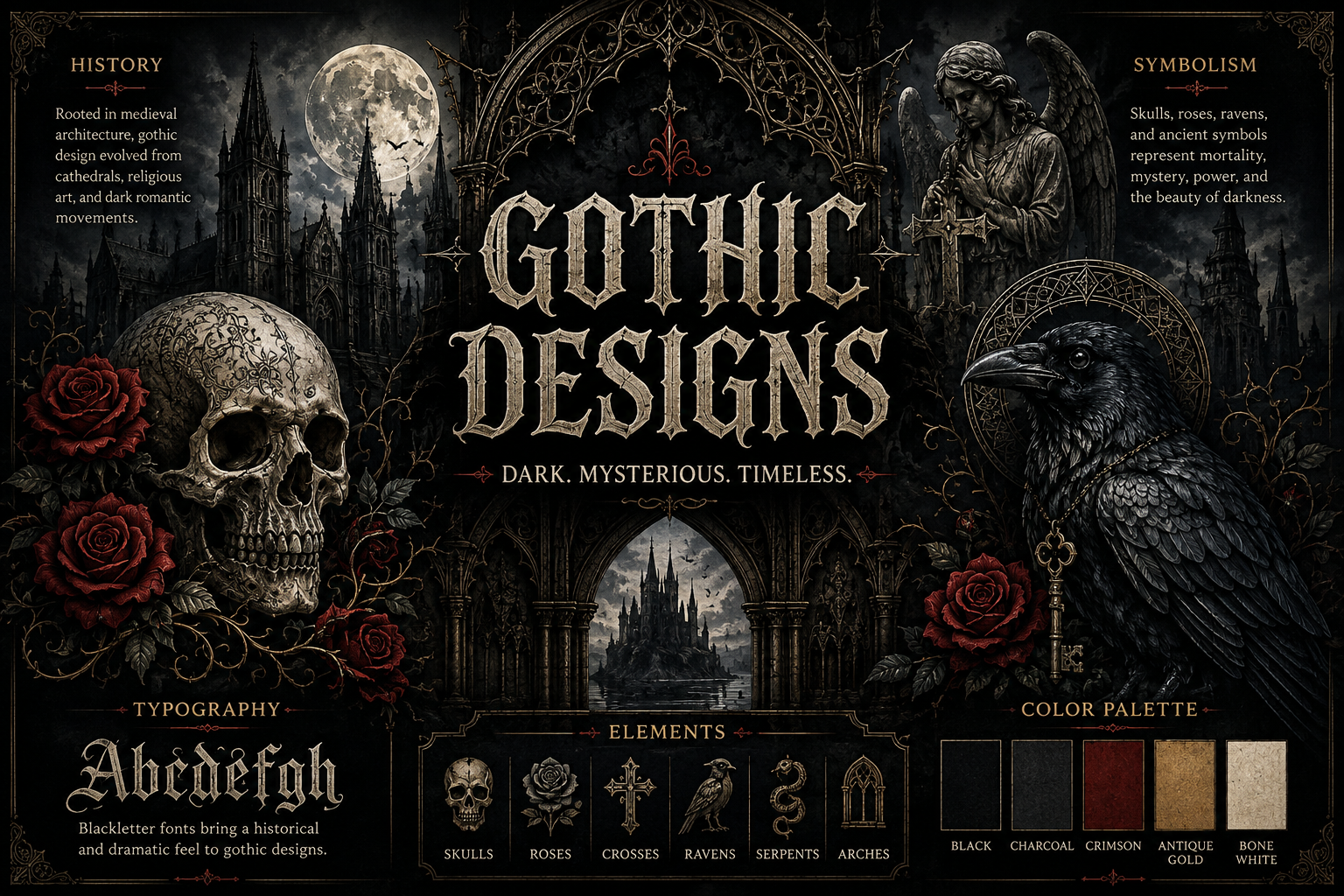
Common elements include:
- Skulls and skeletons
- Gothic arches
- Medieval ornaments
- Roses and thorns
- Crosses and religious imagery
- Gargoyles
- Ravens and bats
- Crowns and royal symbols
- Swords and armor
- Serpents
- Ancient symbols
- Dark floral patterns
- Medieval typography
- Gothic architecture
- Mythological creatures
However, gothic design does not have to use every one of these elements. The strongest designs usually combine a few carefully selected symbols with a clear visual concept.
The History Behind Gothic Aesthetics
The roots of gothic visual culture can be traced to medieval Europe, particularly the Gothic architectural movement that developed during the 12th century.
Gothic architecture introduced dramatic structures featuring pointed arches, ribbed vaults, enormous stained-glass windows, flying buttresses, and towering vertical forms. Buildings such as medieval cathedrals created an atmosphere that felt mysterious, monumental, and otherworldly.
Over time, the word “Gothic” developed new meanings.
During the 18th and 19th centuries, Gothic literature became associated with haunted castles, supernatural mysteries, romance, death, and psychological fear. Authors used darkness not simply to frighten readers but to explore human emotions and the unknown.
This literary tradition eventually influenced fashion, music, film, illustration, and graphic design.
Modern gothic design is therefore a combination of many historical influences rather than a single artistic style.
The Most Popular Gothic Design Elements
1. Skulls
The skull is one of the most recognizable symbols in gothic artwork.
It can represent mortality, transformation, rebellion, danger, or the temporary nature of life. Designers often combine skulls with roses, crowns, snakes, flames, swords, or ornamental frames.
A skull does not necessarily have to make a design frightening. Detailed engraving, symmetrical composition, and elegant typography can transform it into a sophisticated visual element.
2. Roses and Thorns
The rose represents beauty, love, passion, and life, while thorns introduce ideas of pain, sacrifice, and danger.
This contrast makes roses particularly powerful in gothic artwork.
A deep-colored rose surrounded by thorns can communicate the idea that beauty and suffering exist together.
3. Gothic Typography
Typography is one of the most important components of gothic graphic design.
Blackletter and medieval-inspired typefaces are commonly associated with the aesthetic because of their historical connection to European manuscripts and traditional lettering.
Modern designers often combine gothic display typography with simpler serif fonts to create contrast and improve readability.
For example, an ornate gothic headline can be paired with a clean serif body font. This preserves the atmosphere without making the entire design difficult to read.
4. Medieval and Gothic Architecture
Pointed arches, cathedral windows, stone carvings, columns, and ornamental frames can immediately establish a gothic atmosphere.
These elements work particularly well in posters, album artwork, clothing graphics, logos, and packaging.
Architectural motifs can also provide structure for a composition. An arch can function as a natural frame around a character, symbol, or central illustration.
5. Ravens and Crows
Birds such as ravens and crows frequently appear in gothic artwork because they have long associations with mystery, death, intelligence, and folklore.
A raven perched on a gothic arch, skull, sword, or moon can create a strong narrative without requiring many additional elements.
6. Snakes and Serpents
The serpent is an ancient symbol found across numerous cultures and traditions.
Depending on the context, it can represent transformation, danger, wisdom, temptation, rebirth, or hidden knowledge.
In gothic design, serpents are often wrapped around swords, crosses, skulls, roses, or ornamental lettering.
Gothic Color Palettes
Gothic design is strongly associated with dark tones, but effective gothic artwork does not have to be completely black.
Traditional palettes often include:
- Black
- Charcoal
- Deep burgundy
- Dark crimson
- Antique gold
- Bone white
- Deep purple
- Forest green
- Midnight blue
- Muted silver
The key is contrast.
A black background with bone-white illustration creates a classic gothic appearance. Adding a small amount of burgundy or antique gold can introduce depth and create a more luxurious aesthetic.
Modern Gothic Design
Contemporary gothic design has expanded into several different directions.
Gothic Streetwear
Modern clothing brands frequently combine gothic symbols with oversized typography, distressed textures, medieval illustrations, and aggressive compositions.
T-shirts, hoodies, caps, jackets, and accessories provide large surfaces for detailed artwork.
Gothic Luxury
Another direction combines gothic symbolism with luxury aesthetics.
Gold ornamentation, elegant serif typography, symmetrical layouts, dark velvet textures, and intricate linework can create a sophisticated rather than aggressive appearance.
Gothic Minimalism
Minimal gothic design uses fewer elements.
A small skull, symbolic cross, raven, sword, or gothic monogram can become the entire visual identity.
This approach is particularly effective for logos, jewelry, packaging, and premium fashion.
Gothic Horror
Horror-oriented gothic design uses disturbing imagery, skeletal figures, monsters, distorted faces, blood-inspired textures, and supernatural themes.
The objective is often to create tension and psychological unease rather than simply produce something visually dark.
Why Gothic Designs Remain Popular
One reason gothic aesthetics remain relevant is their ability to communicate strong emotions.
A bright and playful design may communicate happiness, while a gothic design can communicate mystery, individuality, power, rebellion, nostalgia, or introspection.
Gothic aesthetics also provide designers with an enormous historical library of symbols.
Medieval architecture, mythology, folklore, religious art, Victorian fashion, ancient weapons, alchemy, astronomy, and supernatural literature can all provide inspiration.
This makes gothic design particularly versatile.
How to Create a Strong Gothic Design
A successful gothic design begins with a concept rather than simply adding dark elements.
Start by choosing the central idea.
For example:
Mortality: skull + roses + medieval ornamentation
Power: crown + sword + gothic typography
Mystery: raven + moon + cathedral architecture
Rebellion: aggressive typography + distorted symbols + distressed textures
Ancient mythology: deity + symbolic animals + ornamental frame
Once the concept is established, select only the visual elements that support it.
Composition is equally important. A strong focal point should immediately attract attention, while secondary elements should guide the viewer through the artwork.
Texture can then be added through engraving lines, stone surfaces, paper grain, distressed effects, scratches, or vintage printing imperfections.
Gothic Design in Fashion
Gothic fashion has become one of the most recognizable applications of the aesthetic.
Graphic T-shirts and hoodies frequently feature medieval illustrations, skeletons, mythological creatures, dark typography, religious symbolism, and elaborate ornamental compositions.
The strongest fashion graphics usually balance complexity with wearability.
A highly detailed illustration may work well as the central artwork, while typography can be kept simple enough to remain recognizable from a distance.
Gothic Design and Symbolism
The most interesting gothic designs tell a story.
A crown above a skull can suggest the temporary nature of power.
A rose growing through bones can represent beauty emerging from death.
A serpent surrounding a sword can suggest temptation, transformation, or power.
A raven standing beneath a moon can evoke mystery and solitude.
This symbolic approach gives a design meaning beyond its appearance.
The Future of Gothic Design
Gothic aesthetics are continuing to evolve through digital illustration, AI-assisted artwork, 3D graphics, motion design, fashion, gaming, music, and social media.
Modern designers are combining traditional blackletter typography and medieval engraving techniques with futuristic layouts, cyberpunk elements, surrealism, and contemporary streetwear.
This fusion creates new forms of gothic design that feel both ancient and modern.
The future of gothic aesthetics is therefore unlikely to be a simple return to medieval imagery. Instead, designers will continue combining historical symbolism with modern technology and visual culture.
Final Thoughts
Gothic design is ultimately about contrast.
Life and death. Beauty and decay. Elegance and darkness. Tradition and rebellion.
Its enduring appeal comes from its ability to turn these contrasts into powerful visual stories.
Whether used in clothing, tattoos, posters, branding, architecture, digital artwork, or illustration, gothic design offers an enormous creative vocabulary. The best gothic artwork does not simply look dark—it communicates an idea, creates an atmosphere, and gives the viewer something to interpret.
That is what makes gothic design timeless.