Table of Contents
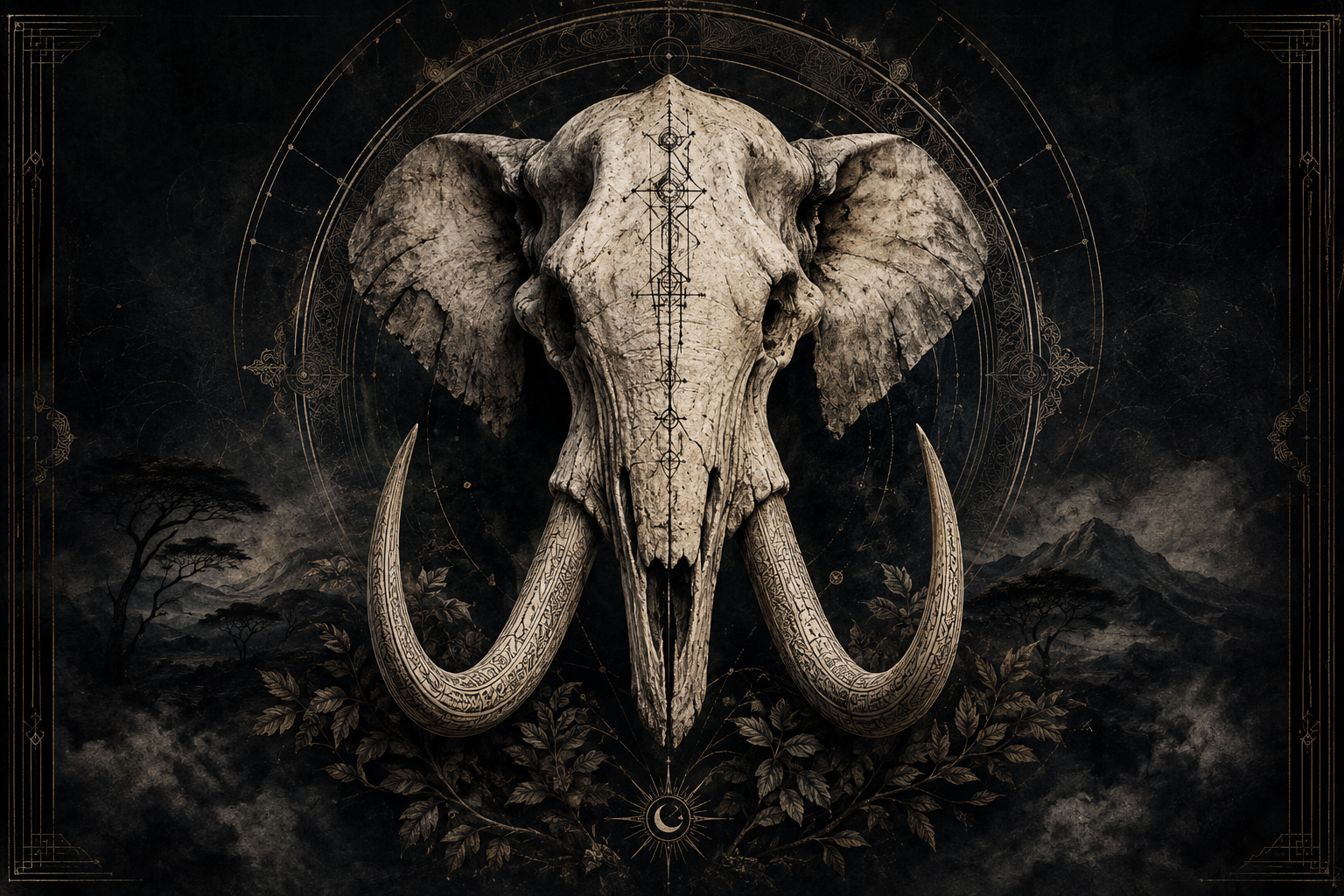
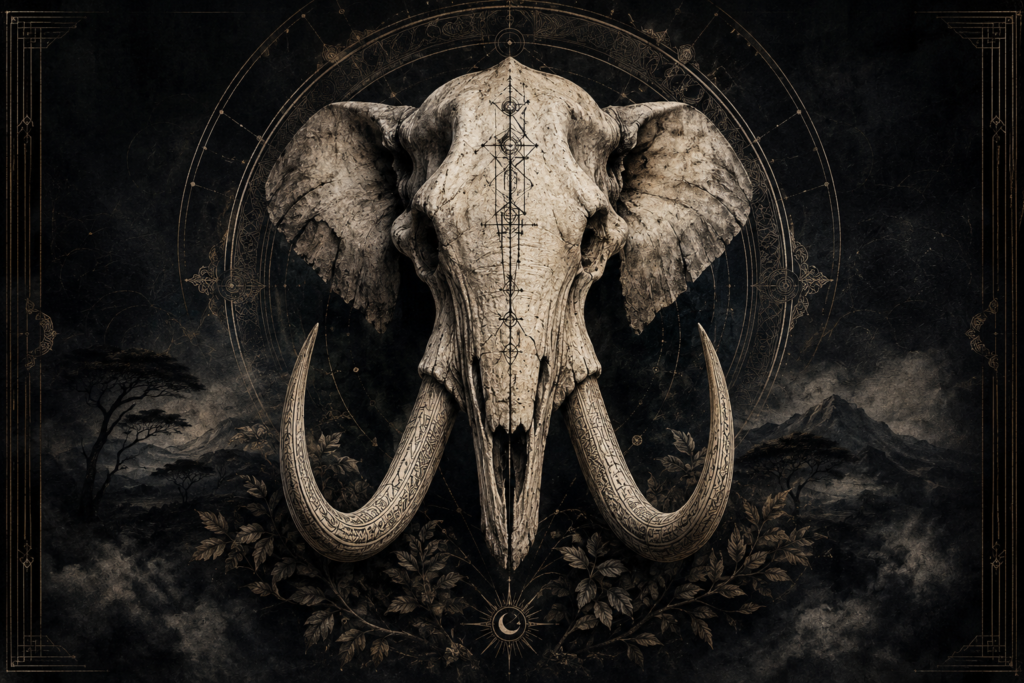
An elephant skull is more than a striking image. Across art, mythology, tattoo culture, fashion, and modern symbolism, the elephant has long represented strength, wisdom, memory, patience, and resilience. When the elephant is represented by its skull, however, the symbolism becomes darker and more philosophical.
The elephant skull brings together two powerful ideas: the enormous strength of the elephant and the unavoidable reality of mortality.
That contrast is what makes the elephant skull such a compelling symbol in contemporary fashion.
At TOHOOD, symbols are not chosen simply because they look powerful. Ancient imagery, mythology, death symbolism, and cultural motifs can carry layers of meaning, and the elephant skull represents one of the most interesting combinations of them all: power, mortality, memory, transformation, and the passage of time.
What Does an Elephant Symbolize?
Before understanding the meaning of an elephant skull, it helps to understand what the elephant itself traditionally represents.
Elephants have been admired by human civilizations for thousands of years. Their size and physical strength naturally associate them with power, but their social behavior and intelligence have also contributed to their reputation as wise and emotionally complex animals.
Common symbolic associations of the elephant include:
- Strength
- Wisdom
- Patience
- Memory
- Loyalty
- Family
- Protection
- Leadership
- Resilience
- Good fortune
In many cultures, elephants are also connected with spiritual or religious traditions.
The elephant-headed Hindu deity Ganesha, for example, is widely associated with wisdom, learning, prosperity, and the removal of obstacles. In South and Southeast Asian traditions, elephants have also historically been associated with royalty, ceremony, warfare, and authority.
In African cultures, elephants can carry associations with power, leadership, ancestry, and the natural world, although meanings vary significantly between communities and traditions.
The elephant therefore already has a rich symbolic vocabulary.
The skull changes the conversation.
What Does an Elephant Skull Represent?
An elephant skull can symbolize the relationship between strength and mortality.
The living elephant represents physical power, movement, family, intelligence, and endurance. The skull represents what remains after life has passed.
Together, they create a powerful visual statement:
Even the strongest eventually becomes part of history.
This does not necessarily make the elephant skull a symbol of sadness or death alone. It can instead represent acceptance, transformation, remembrance, and the temporary nature of physical existence.
Some of its most common modern interpretations include:
1. Mortality
The most direct meaning of a skull is mortality.
An elephant is one of the largest and most powerful land animals on Earth. Seeing its skull emphasizes that even something enormous and seemingly invincible is ultimately mortal.
The image can therefore serve as a reminder that strength does not make us immortal.
2. Memory
Elephants have become culturally associated with exceptional memory, giving the elephant skull another layer of meaning.
An elephant skull can represent memories that remain after someone, something, or a particular period of life has passed.
For some people, this makes the symbol especially meaningful as a representation of remembrance.
3. Transformation
A skull is not simply an ending.
It can also represent transformation.
Life changes form. What once moved, breathed, and lived eventually becomes part of the natural environment. In this sense, the skull can symbolize the transition from one state of existence to another.
That makes the elephant skull particularly relevant to people who see personal growth as a process of constantly leaving old versions of themselves behind.
4. Resilience
The elephant represents resilience because of its ability to survive difficult environments and adapt to changing circumstances.
The skull adds another dimension: surviving what life throws at you while remembering that nothing lasts forever.
The symbolism becomes less about being invincible and more about being resilient.
5. Strength Beyond Appearance
The elephant skull also challenges the conventional idea of strength.
A living elephant demonstrates strength through its body.
A skull demonstrates strength through what remains.
This creates a visual metaphor for inner strength: the idea that your experiences, struggles, failures, and memories can become part of the person you eventually become.
The Elephant and the Idea of Memory
Few symbolic associations with elephants are as famous as their connection with memory.
The phrase “an elephant never forgets” is deeply embedded in popular culture. While this phrase simplifies the scientific understanding of elephant cognition, elephants do demonstrate impressive memory and social intelligence.
They can recognize individuals, remember social relationships, navigate large environments, and retain important information over long periods.
This makes memory one of the most natural interpretations of elephant imagery.
When the image becomes an elephant skull, memory takes on a darker meaning.
The skull can represent:
What remains when everything else has changed.
A person may leave a place.
A relationship may end.
A period of life may disappear.
But the memories can remain.
This is one reason skull imagery can feel philosophical rather than simply aggressive or rebellious.
Death Does Not Always Mean Destruction
Skulls are often misunderstood as symbols of violence.
In reality, skull symbolism has appeared in many different cultural and artistic contexts. Sometimes it represents death directly. In other contexts, it represents the temporary nature of life, remembrance, change, or the acceptance of mortality.
The elephant skull fits particularly well into this second category.
The elephant itself is strongly associated with life, family, intelligence, and endurance.
Putting a skull into that visual language creates a contrast between life and death.
It asks a simple but profound question:
What remains after strength is gone?
The answer can be memory, legacy, experience, influence, or simply the natural continuation of life.
Elephant Skull Symbolism in Art
Artists have long used animal bones and skulls to explore themes that are difficult to communicate through ordinary portraits.
A living elephant can communicate:
- Power
- Majesty
- Intelligence
- Movement
An elephant skull can communicate:
- Mortality
- History
- Memory
- Mystery
- Transformation
This makes the skull visually interesting because it removes many of the characteristics that make the animal recognizable as a living creature while leaving behind its underlying structure.
The result is both anatomical and symbolic.
For fashion designers, this creates an opportunity to combine natural history with darker visual aesthetics.
Why Elephant Skulls Work in Gothic Fashion
Gothic fashion frequently explores themes such as mortality, mythology, darkness, romanticism, mystery, and the passage of time.
An elephant skull naturally fits into this visual language.
Its large proportions create a powerful graphic silhouette, while the skeletal structure introduces complexity and detail.
Unlike a generic skull graphic, an elephant skull carries an additional narrative.
It suggests:
Power + memory + mortality + transformation.
That combination can make the design feel more meaningful than a simple symbol of rebellion.
Elephant Skull Tattoos and Their Meanings
Elephant skull tattoos can have highly personal meanings.
For one person, the design may represent overcoming a difficult period.
For another, it may represent a loved one or memories that remain.
Someone else may choose it because they connect with themes of mortality and transformation.
Common personal interpretations include:
- Remembering someone important
- Accepting change
- Overcoming hardship
- Respecting nature
- Recognizing mortality
- Personal transformation
- Strength through adversity
- Leaving a legacy
- Learning from the past
The meaning ultimately depends on the person wearing the symbol.
That is an important part of symbolic art: there is rarely only one interpretation.
Elephant Skull in Modern Streetwear
Modern streetwear often borrows visual language from mythology, history, military imagery, gothic art, religious symbolism, and natural history.
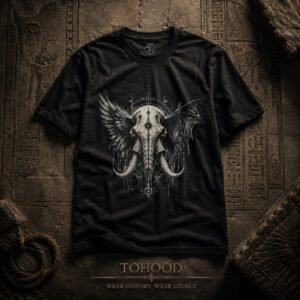
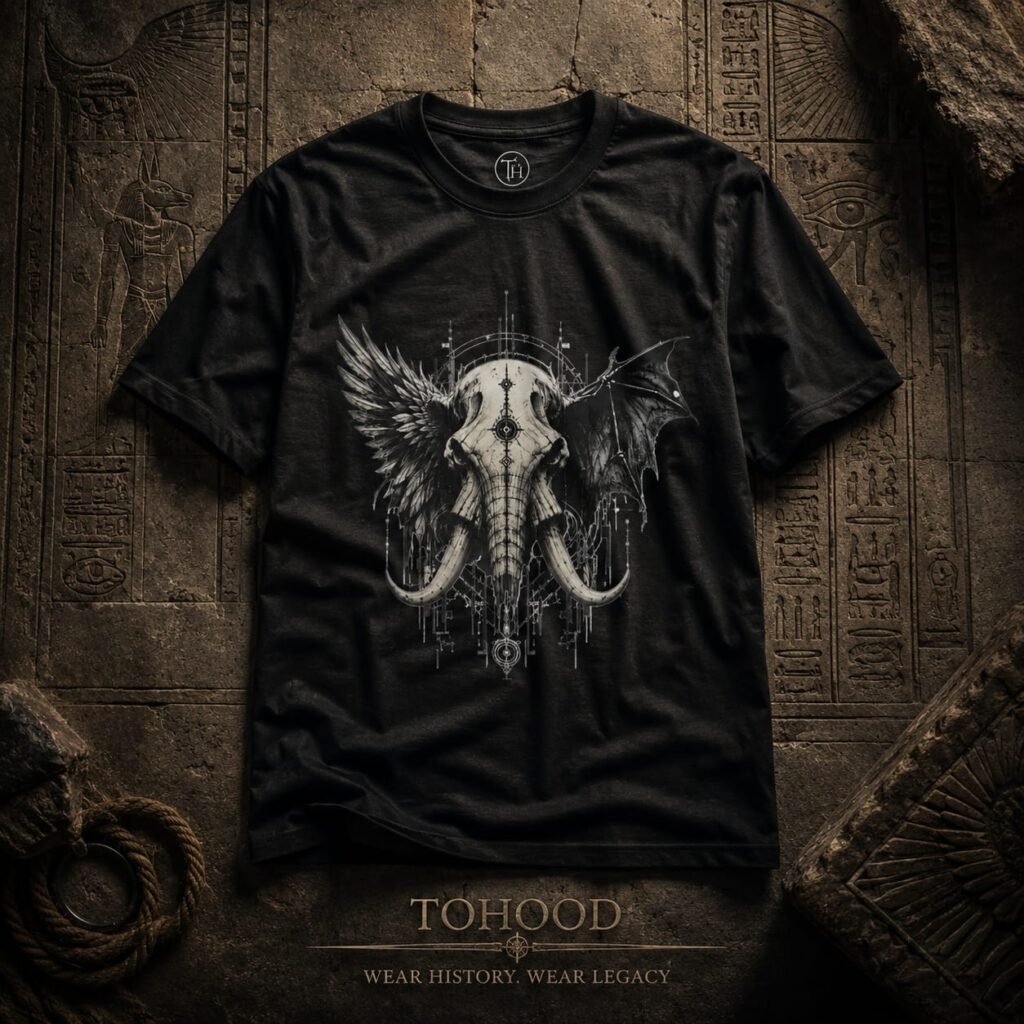
Elephant skull graphics fit naturally within this aesthetic because they combine recognizable anatomy with a strong symbolic message.
A detailed elephant skull can work especially well with:
- Distressed textures
- Vintage engraving styles
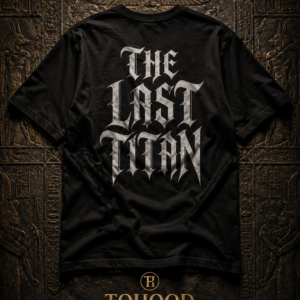
- Gothic typography
- Ancient-inspired artwork
- Monochrome graphics
- Tribal-inspired patterns
- Dark illustrative compositions
- Vintage anatomical aesthetics
The result can feel less like a simple animal graphic and more like an artifact discovered from another era.
The Difference Between an Elephant and an Elephant Skull
The distinction is important.
An elephant generally communicates life and strength.
An elephant skull communicates what remains after life.
| Elephant | Elephant Skull |
|---|---|
| Strength | Mortality |
| Wisdom | Memory |
| Family | Legacy |
| Protection | Remembrance |
| Life | Transformation |
| Power | The temporary nature of power |
| Movement | Stillness |
| Presence | What remains |
Neither interpretation is necessarily better.
They simply tell different stories.
What Does an Elephant Skull Mean in Fashion?
In fashion, symbolism does not always need to be literal.
A person wearing an elephant skull graphic may simply appreciate the artwork. Another person may identify deeply with its meaning.
The design can communicate a personality that values:
- Individuality
- Strength
- History
- Mystery
- Philosophy
- Dark aesthetics
- Symbolic storytelling
This is one of the reasons meaningful graphics continue to play such an important role in alternative and graphic fashion.
A good design does more than decorate a garment.
It gives the wearer something to identify with.
The Philosophy Behind the Symbol
Perhaps the most interesting interpretation of the elephant skull is the idea that strength and mortality are not opposites.
They exist together.
Being strong does not mean avoiding hardship.
Being resilient does not mean avoiding change.
And living a meaningful life does not require pretending that life lasts forever.
The elephant skull can therefore become a reminder to make the most of the time available.
Its message can be interpreted as:
Be strong, remember where you came from, accept change, and leave something meaningful behind.
That is a much deeper idea than simply associating a skull with death.
Why TOHOOD Uses Symbolic Designs
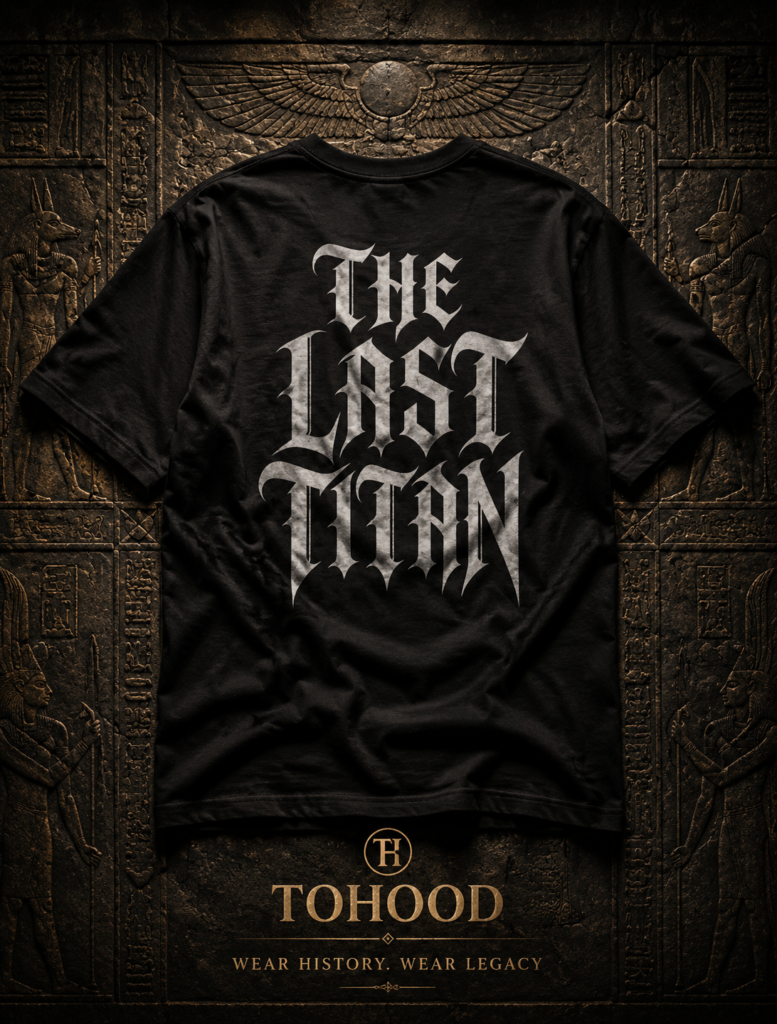
At TOHOOD, graphic fashion is approached as a form of visual storytelling.
Ancient symbols, mythological figures, skulls, historical motifs, and dark artwork can communicate ideas that ordinary graphics cannot.
The goal is not simply to make a design look dark.
The goal is to create artwork that gives the wearer something to think about.
An elephant skull is a perfect example.
At first glance, it is powerful and visually striking.
Look closer, and it becomes a symbol of memory, mortality, resilience, transformation, and legacy.
That contrast is what gives symbolic fashion its character.
Final Thought
The elephant skull represents more than death.
It can represent the memory of what once existed, the transformation that follows every ending, and the idea that even immense strength is temporary.
The living elephant reminds us of power.
The skull reminds us of time.
Together, they tell a deeper story about resilience, memory, mortality, and legacy.
Perhaps that is why the elephant skull remains such a powerful image in modern art and fashion.
Strength may define how we live, but what we leave behind defines how we are remembered.
TOHOOD
Wear the story.