Table of Contents
Across ancient civilizations, people told stories about powerful female deities.
Some were associated with wisdom.
Others with war.
Some represented fertility, motherhood or the earth.
Others were connected with death, magic, the moon, sexuality, protection or transformation.
There was never one universal idea of what a goddess represented.
That is important.
The phrase “divine feminine” is widely used today, but ancient cultures did not all share one standardized concept of feminine divinity. Greek, Egyptian, Mesopotamian, Roman, Norse and other religious traditions developed their own gods, goddesses and symbolic systems.
Yet there are recurring themes.
Power.
Creation.
Protection.
Transformation.
Mystery.
Wisdom.
Destruction.
Rebirth.
These themes are part of the reason goddess imagery continues to influence art, jewelry, tattoos, literature, film and fashion.
At TOHOOD, we are interested in that visual and cultural legacy—not in reducing thousands of years of mythology to a single modern definition.
What Is Goddess Symbolism?
Goddess symbolism refers to the meanings, attributes and visual associations connected with female deities in different religious and mythological traditions.
Those meanings vary enormously.
A goddess might represent:
- wisdom
- war
- fertility
- motherhood
- love
- beauty
- death
- magic
- justice
- nature
- sovereignty
- protection
- transformation
The mistake is assuming that all goddesses represent the same thing.
They don’t.
Athena is not Isis.
Isis is not Artemis.
Artemis is not Inanna.
Inanna is not Freyja.
Each belongs to a different cultural and religious context.
The similarities become useful when comparing traditions, but the differences are equally important.
Why Did Ancient Cultures Have Goddesses?
The short answer is that ancient religions developed many different explanations for the world around them.
People encountered:
- birth
- death
- fertility
- seasons
- storms
- war
- disease
- harvests
- sexuality
- family
- political power
- natural landscapes
Religious traditions personified and interpreted these forces in different ways.
Female deities therefore became associated with many aspects of life.
But there was no universal formula saying:
female deity = fertility
or
goddess = mother.
Ancient religions were much more complicated.
Some goddesses were warriors.
Some were rulers.
Some were associated with death.
Some were protectors.
Some could embody several seemingly contradictory qualities at once.
Athena: Wisdom and Strategic Power
Athena is one of the clearest examples of a goddess whose identity doesn’t fit the simplistic idea of femininity.
In Greek mythology, Athena is associated with wisdom, strategic warfare, crafts and civic life.
She is also strongly associated with the city of Athens.
Her mythology combines intelligence and military strategy rather than simply physical strength.
Her familiar symbols include:
- the owl
- the olive tree
- armor
- spear
- shield
- the aegis
The owl is particularly important because it became strongly associated with wisdom and Athena.
The Metropolitan Museum’s collections contain numerous objects showing Athena through these recognizable attributes.
Her visual language communicates an important idea:
power can come from intelligence.
Artemis: Independence and the Wild
Artemis represents another dimension of goddess symbolism.
She is associated with hunting, wilderness, animals and the protection of young people, among other aspects of her ancient cult and mythology.
Her iconography frequently includes:
- bow
- arrows
- hunting clothing
- animals
- the wilderness
Artemis therefore represents a form of power connected with independence and the natural world.
Unlike a queen sitting on a throne, Artemis is frequently imagined in motion.
She belongs to forests and mountains.
Her power is not primarily architectural.
It is environmental.
Aphrodite: Beauty and Desire
Aphrodite is one of the most famous goddesses of the Greek world.
She is strongly associated with love, beauty and desire.
But even here, the modern interpretation can be too narrow.
Ancient worship of Aphrodite involved religious practices and local traditions that went beyond the modern idea of “love goddess.”
Her image could be associated with:
- beauty
- attraction
- sexuality
- fertility
- desire
- social relationships
Her influence on Western art has been enormous.
The female form became a major subject through representations of Aphrodite and Venus, her Roman counterpart.
Hecate: Magic, Crossroads and the Night
Hecate is particularly interesting for modern audiences because her imagery is often connected with:
- magic
- night
- crossroads
- boundaries
- ghosts
- the underworld
Her role developed across Greek religious traditions and changed over time.
Hecate demonstrates something important about goddess symbolism:
divine power does not always have to be bright or benevolent.
A goddess can represent the mysterious.
The hidden.
The liminal.
The space between one state and another.
That is one reason Hecate has become influential in modern interpretations of dark feminine imagery.
Isis: Motherhood, Magic and Royal Power
Ancient Egyptian religion provides another enormous tradition of goddess symbolism.
Isis was one of the most important goddesses in ancient Egypt.
Her mythology connects her with:
- motherhood
- magic
- protection
- kingship
- healing
- mourning
- restoration
Her most famous mythological role involves her husband Osiris and their son Horus.
After Osiris is killed, Isis searches for and restores him according to Egyptian mythological traditions.
Her story therefore contains themes of:
loss
devotion
magic
restoration
motherhood
and
continuity.
The Metropolitan Museum’s Egyptian collections provide extensive material on Isis, Osiris and the mythology surrounding them.
Isis and the Egyptian Throne
Isis also has a particularly important connection to kingship.
Her name and iconography are associated with the throne.
The hieroglyphic sign used in her name is often interpreted in relation to a throne.
This makes her symbolism more politically significant than the modern category “mother goddess” suggests.
She could be connected with the legitimacy and protection of kingship.
Again, mythology refuses to stay inside simple categories.
Sekhmet: Destruction and Protection
Sekhmet is one of the most striking goddesses in Egyptian mythology.
She is represented with the head of a lioness.
The lioness immediately communicates power.
Sekhmet could be associated with war, destruction, disease and protection.
This combination is fascinating.
The same divine force capable of destroying enemies could also protect Egypt and the king.
It reflects a recurring principle in ancient symbolism:
danger can also become protection.
The lioness isn’t powerful because she is gentle.
She is powerful because she is capable of both destruction and defense.
Bastet: Protection and the Cat
Bastet developed from a lioness-associated deity into a goddess increasingly represented in feline form.
Her worship became strongly associated with cats, protection and domestic life.
Modern popular culture often reduces Bastet to:
“the Egyptian cat goddess.”
That isn’t completely wrong, but it is incomplete.
Her history is longer and more complicated.
Her associations changed over time.
This is another important lesson in mythology:
religious identities evolve.
Goddesses and the Moon
The moon is frequently associated with female deities in modern symbolism.
But we should be careful here.
Not every ancient culture believed the moon was female.
Not every goddess was a moon goddess.
And not every moon goddess had the same role.
Greek traditions, Roman traditions and other ancient cultures developed different relationships between lunar deities and mythology.
For example, Artemis became strongly associated with the moon in later traditions, while Selene was explicitly personified as the moon in Greek mythology.
The distinction between them matters.
It shows why research is important when discussing mythology.
What Does the Moon Symbolize?
In modern visual culture, the moon frequently represents:
- mystery
- cycles
- transformation
- femininity
- night
- intuition
- change
- hidden knowledge
Some of these associations have ancient precedents.
Others are modern interpretations.
The moon’s changing phases make it naturally suited to ideas of transformation.
It disappears.
Returns.
Grows.
Shrinks.
Repeats.
That visual cycle makes it a powerful metaphor.
The Goddess as a Symbol of Transformation
Transformation appears repeatedly in goddess mythology.
A woman can become:
- queen
- warrior
- mother
- monster
- protector
- sorceress
- goddess
- underworld ruler
These transformations are not identical across traditions.
But the theme of changing identity is widespread.
This is one reason goddess imagery continues to resonate.
People themselves move through different identities during their lives.
Child.
Adult.
Parent.
Leader.
Caregiver.
Creator.
Survivor.
The mythological goddess becomes a symbolic language for transformation.
The Idea of the Divine Feminine
The term divine feminine is popular today in spirituality, psychology, wellness culture and contemporary art.
But it is important to distinguish the modern concept from ancient religions.
There was no single ancient “divine feminine doctrine.”
Different cultures had different female deities with different roles.
Modern writers often use “divine feminine” as an umbrella concept for qualities such as:
- intuition
- creation
- compassion
- strength
- receptivity
- transformation
- nurturing
- mystery
Those are modern interpretive frameworks.
They can be useful.
But they should not be presented as though every ancient civilization shared them.
The Problem With the “Mother Goddess” Idea
One common claim in popular culture is that prehistoric societies universally worshipped a single Great Mother Goddess.
The evidence is much more complicated.
Archaeologists have discovered many prehistoric female figurines and representations.
But interpreting every female figure as a universal goddess is not scientifically justified.
Some objects may have had religious significance.
Others may have represented individuals, ancestors, fertility, beauty or something we cannot confidently identify today.
This is where responsible historical writing matters.
Not every ancient female figure is proof of a goddess cult.
Sometimes the correct answer is:
We don’t know.
Admitting uncertainty is part of good scholarship.
Goddesses Were Not Always “Good”
Modern storytelling sometimes divides characters into:
good goddess
and
evil goddess.
Ancient mythology was rarely that simple.
A goddess could:
- protect people
- punish enemies
- bring fertility
- cause destruction
- heal
- kill
- reward
- curse
The same deity could embody opposing forces.
Sekhmet could destroy and protect.
Hecate could represent boundaries and darkness.
Athena could represent wisdom and warfare.
This complexity makes goddess mythology far more interesting than a simple list of personality traits.
Goddess Symbolism and Power
Why does goddess imagery feel powerful today?
Partly because the symbols are immediately recognizable.
A crown.
A spear.
A moon.
A lioness.
A snake.
An owl.
A throne.
Each object communicates something.
The goddess brings these symbols together into a recognizable identity.
That is essentially what ancient visual artists were doing.
They were building a visual vocabulary.
Modern graphic designers do the same thing.
How Ancient Artists Communicated Identity
Ancient art frequently used attributes to identify divine figures.
An owl could suggest Athena.
A bow could suggest Artemis.
A lioness could suggest Sekhmet.
A throne symbol could suggest Isis.
A particular crown could communicate Egyptian royalty.
This is visual storytelling.
The viewer doesn’t need a paragraph of text.
The object tells them who they are looking at.
That principle is still alive in modern graphic design.
Goddess Imagery in Modern Fashion
Fashion is full of symbolic language.
A garment can communicate:
- identity
- confidence
- rebellion
- culture
- personality
- belonging
Goddess imagery works particularly well because it combines recognizable human forms with symbolic attributes.
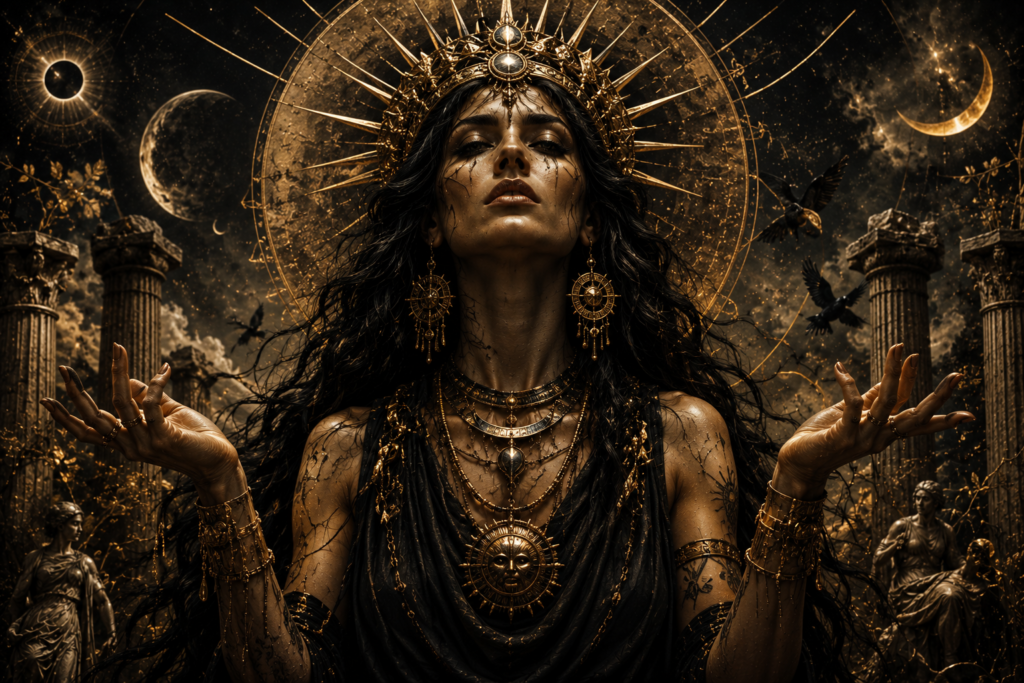
A face surrounded by a halo can communicate divinity.
A crown can communicate sovereignty.
A moon can communicate mystery.
A sword can communicate strength.
A snake can communicate transformation.
A combination of these elements creates a visual story.
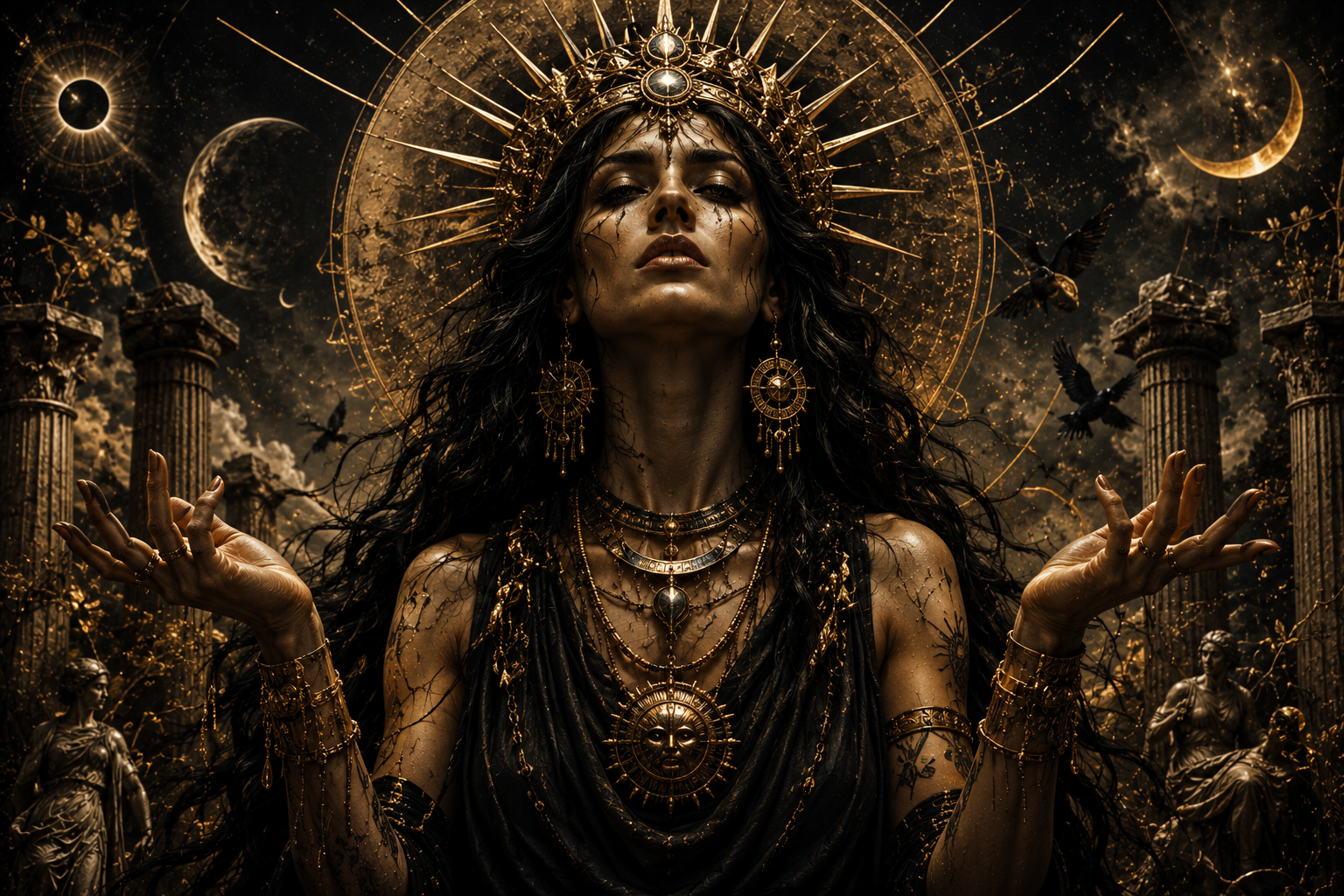
Why the “Dark Goddess” Has Become Popular
Contemporary fashion and popular culture frequently use the idea of the dark goddess.
This figure may be represented through:
- black clothing
- dramatic makeup
- moon imagery
- snakes
- crowns
- shadows
- occult-inspired geometry
- statuesque poses
But the dark goddess isn’t one ancient deity.
It is a modern composite aesthetic.
It borrows imagery from many historical traditions and combines it into a contemporary visual identity.
That’s important to acknowledge.
The modern aesthetic is creative interpretation—not an ancient religious category.
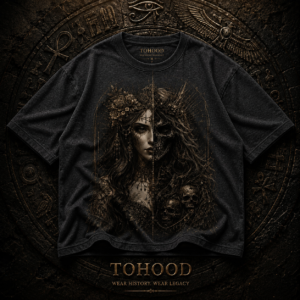
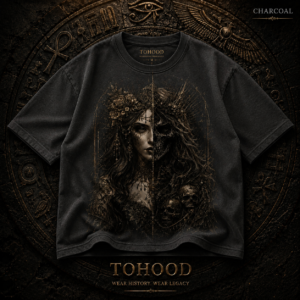
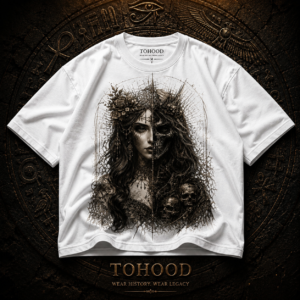
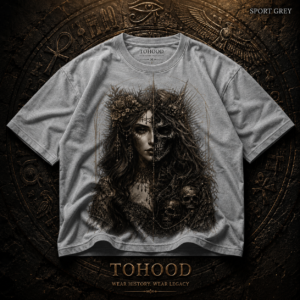
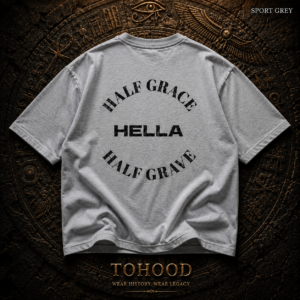
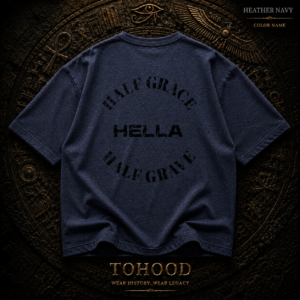
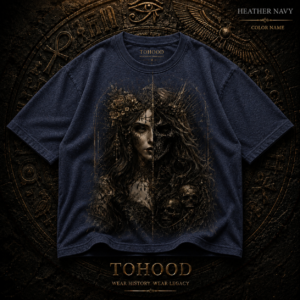
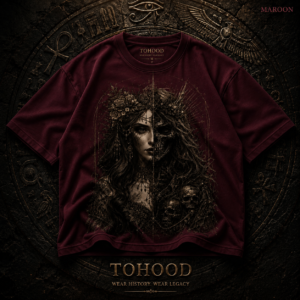
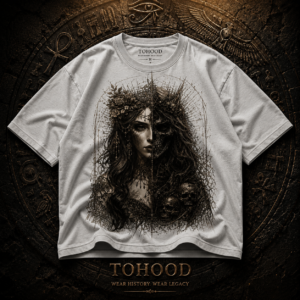
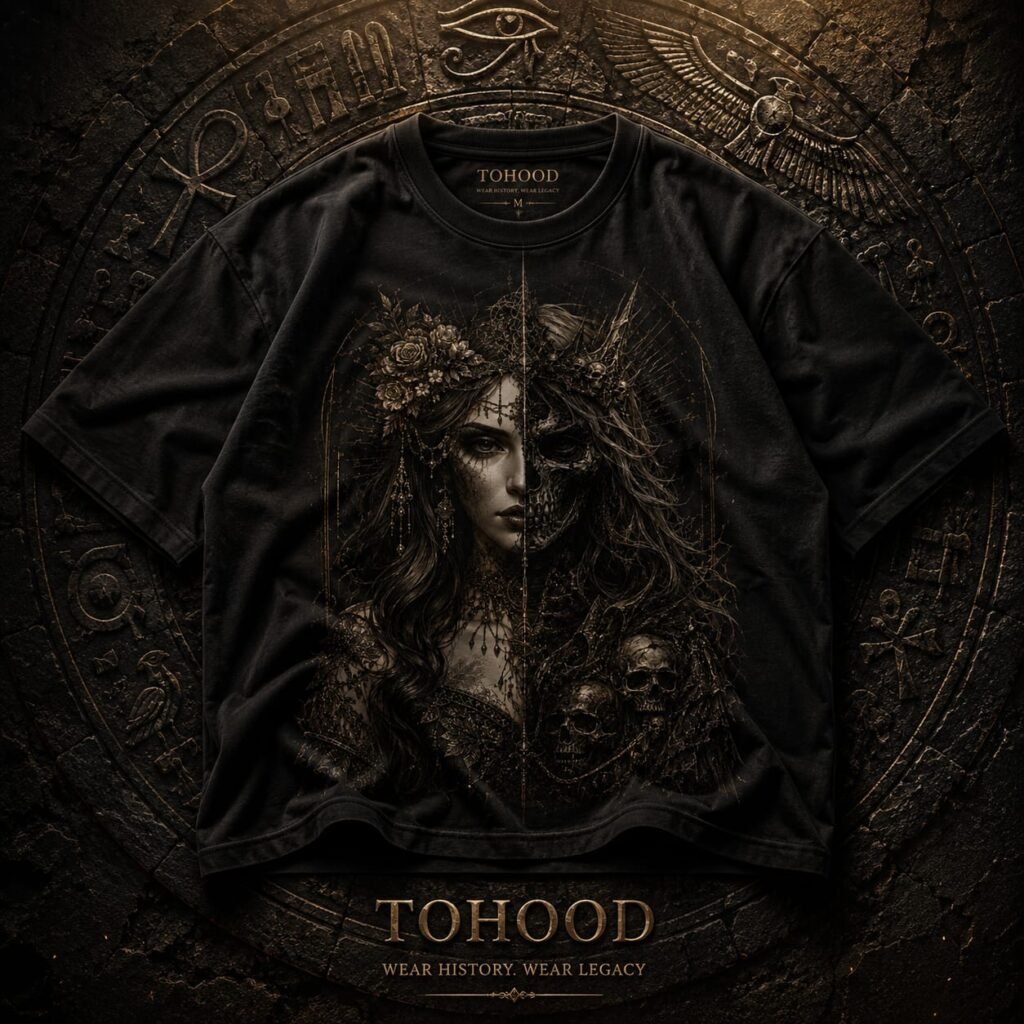
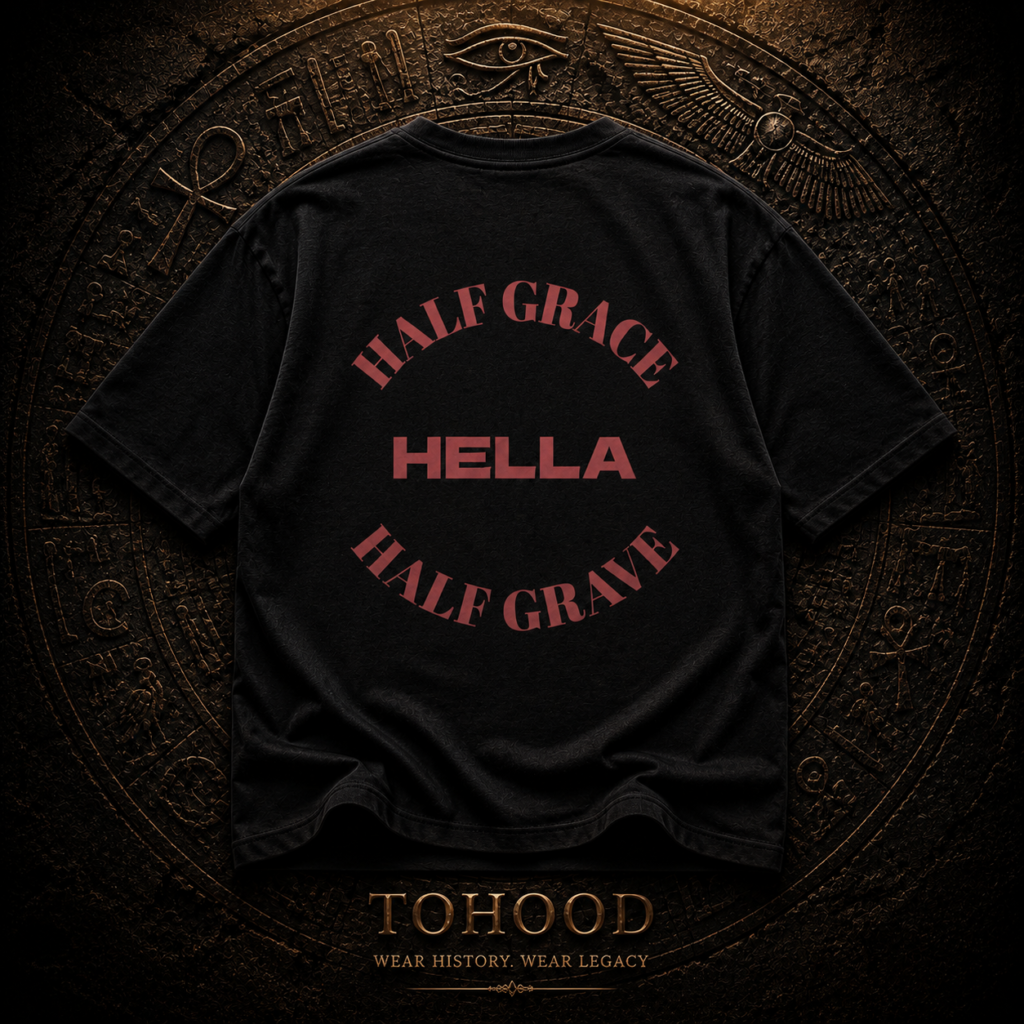
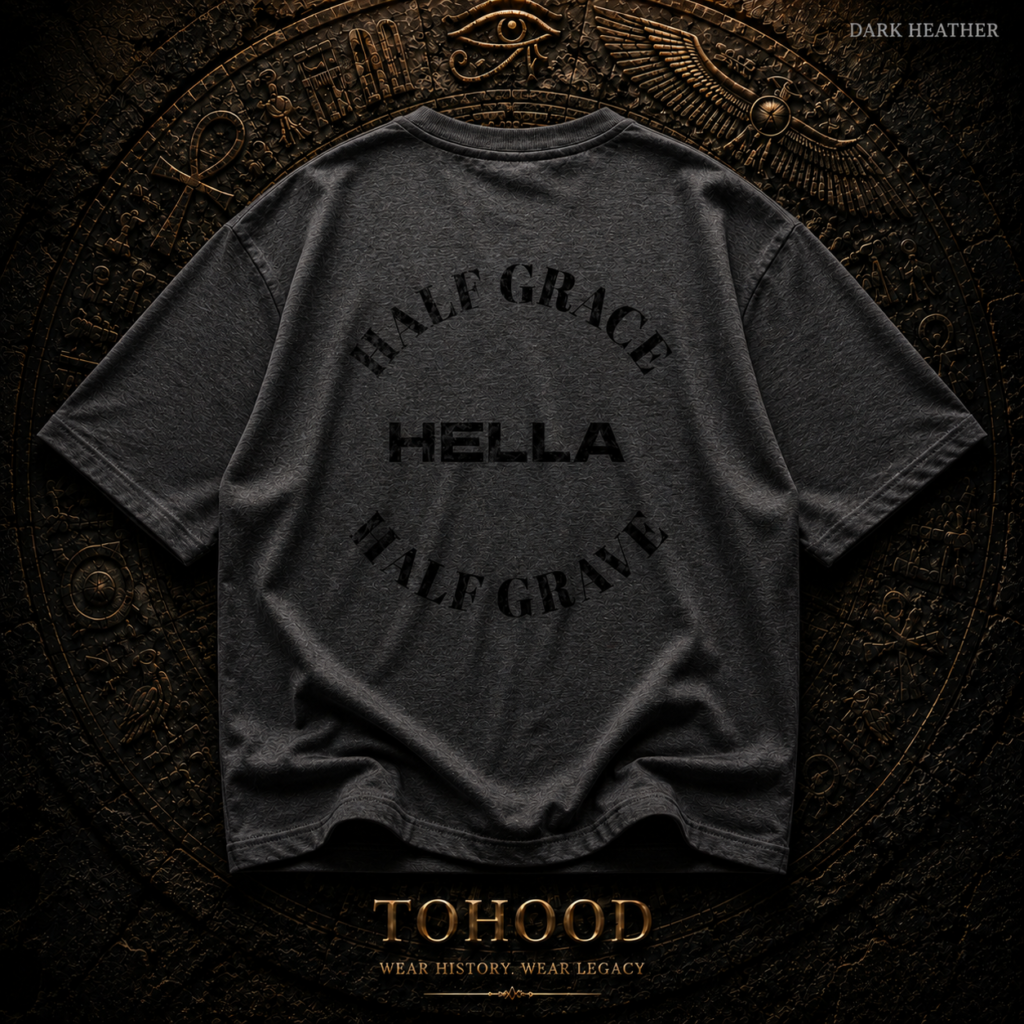
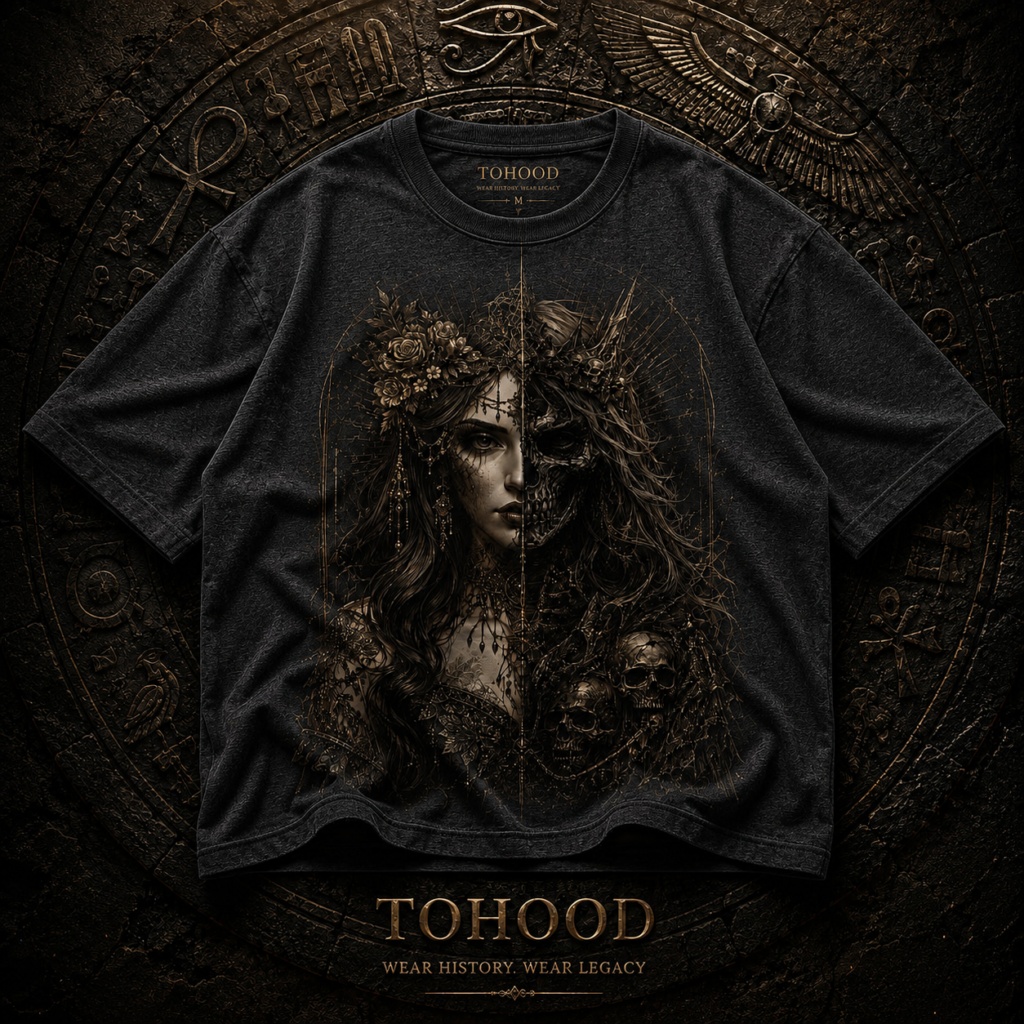
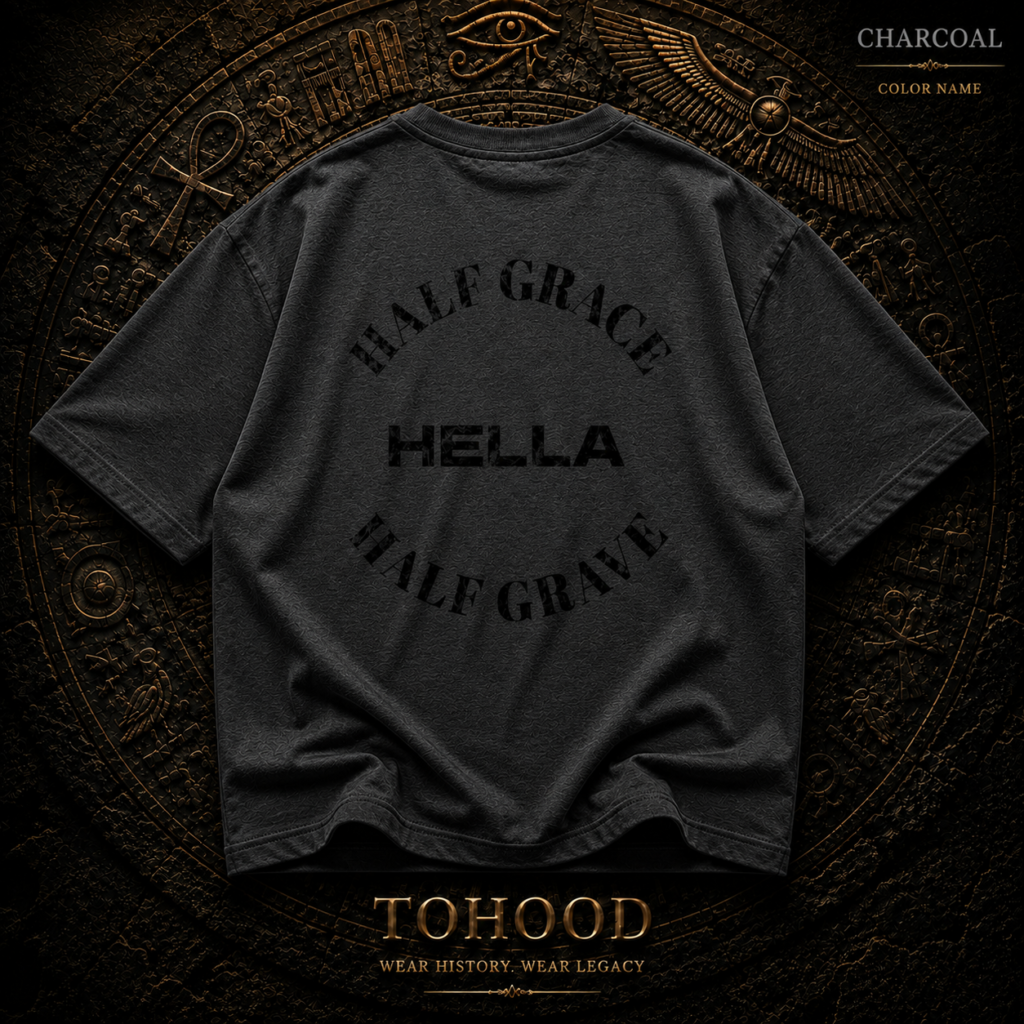
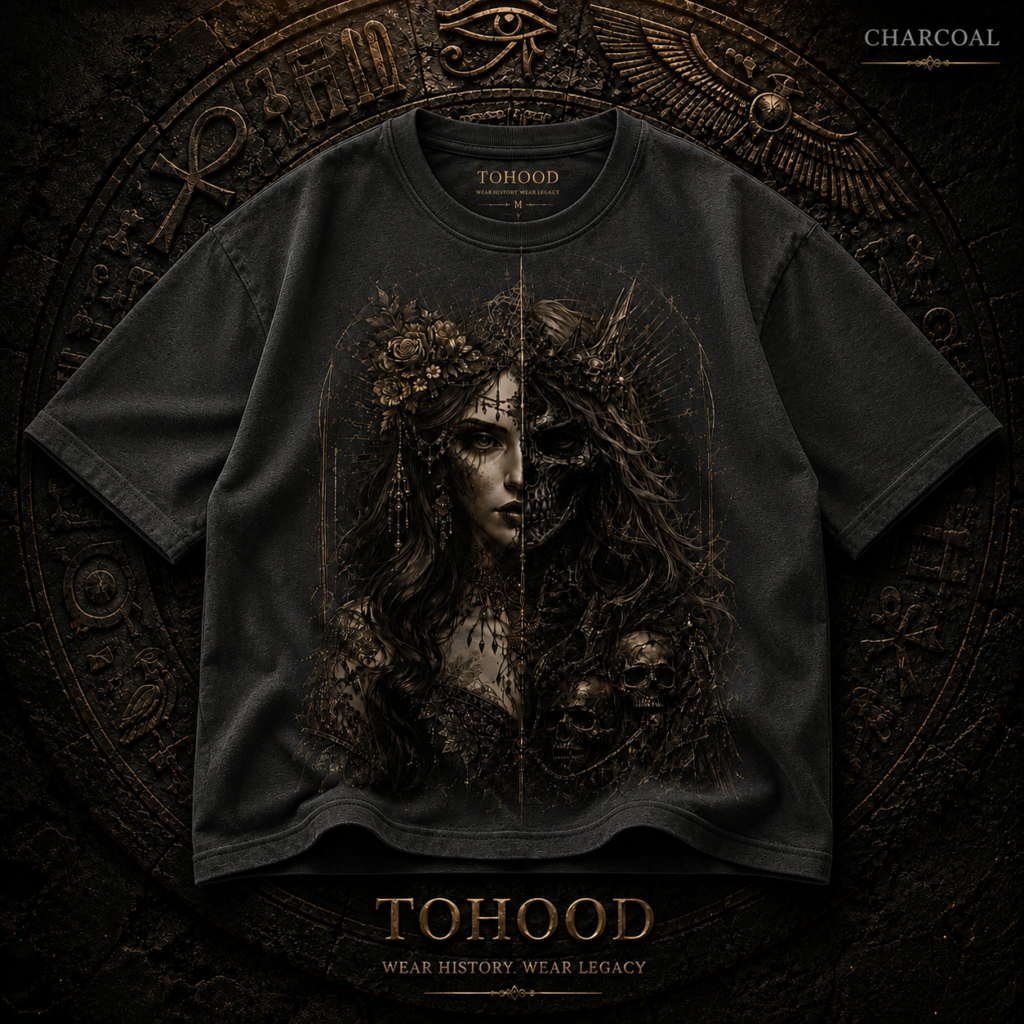
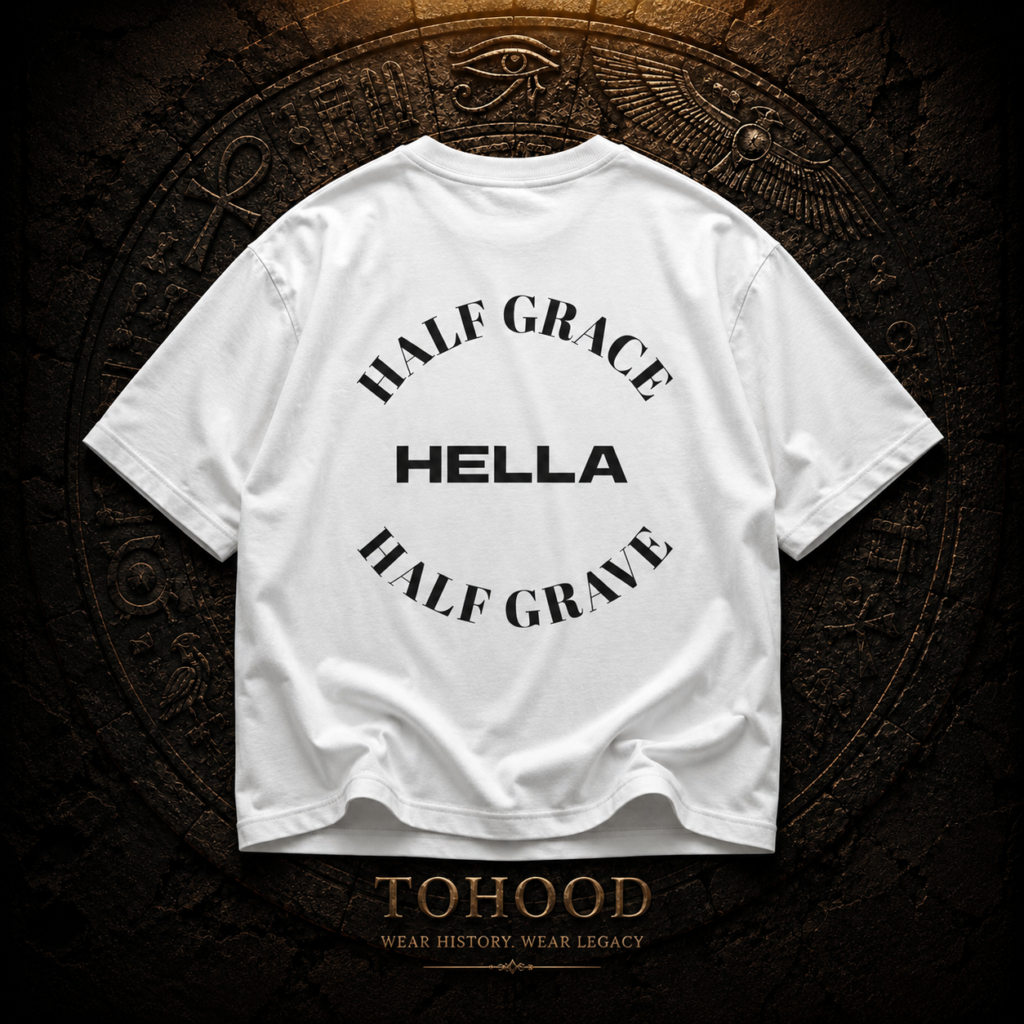
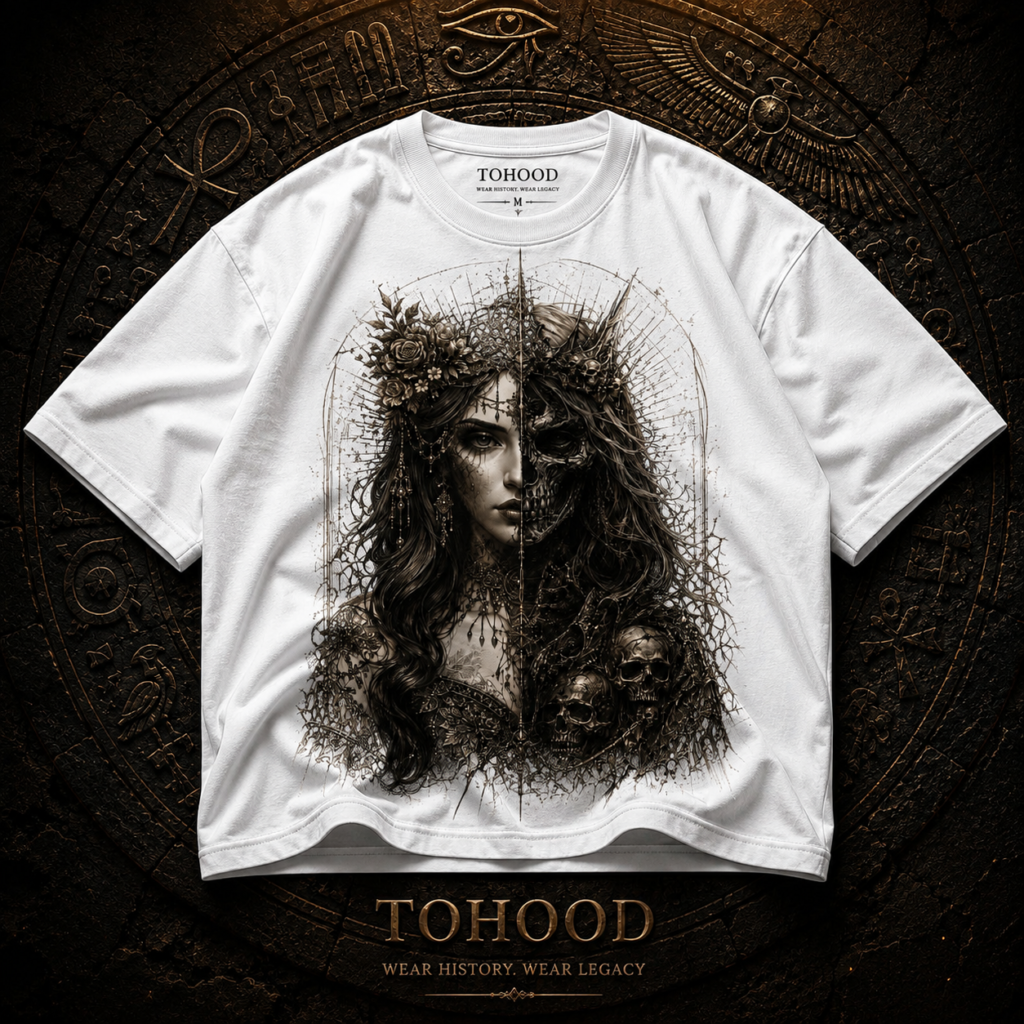
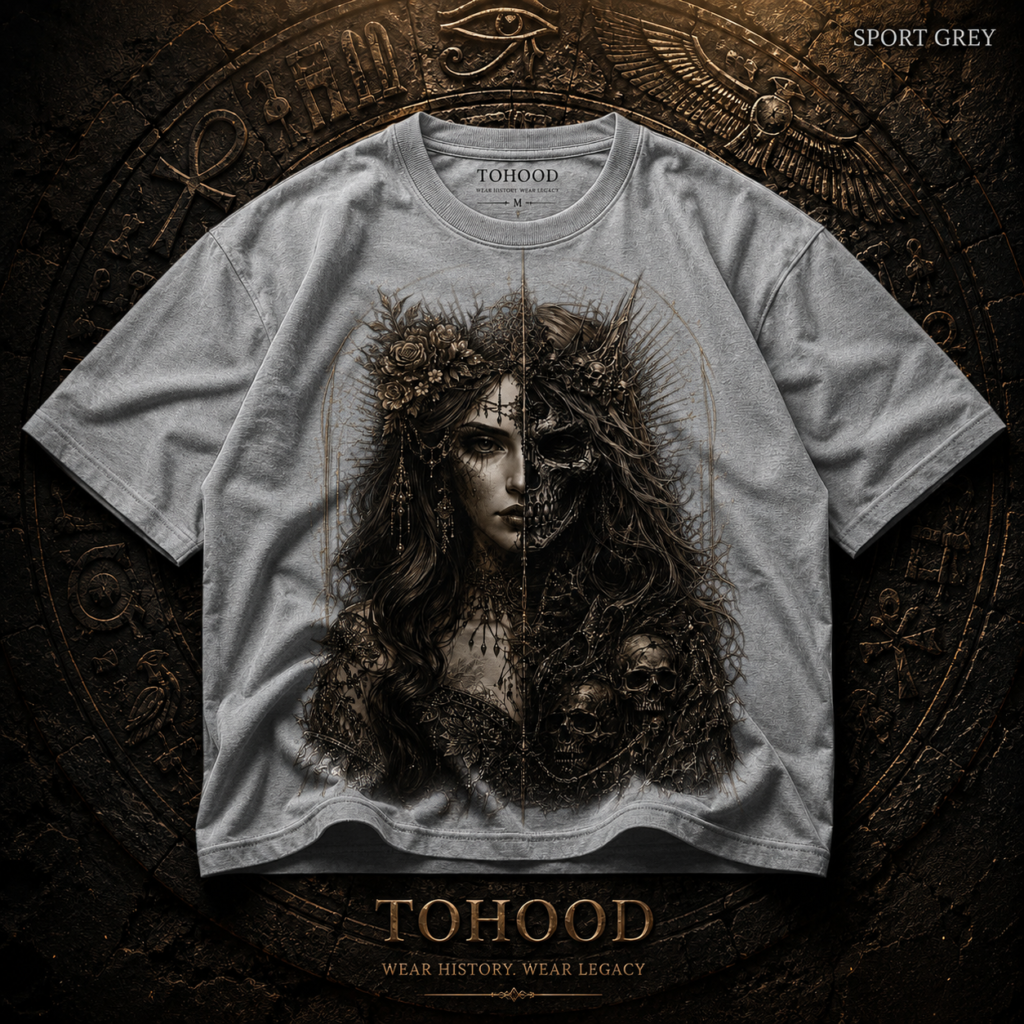
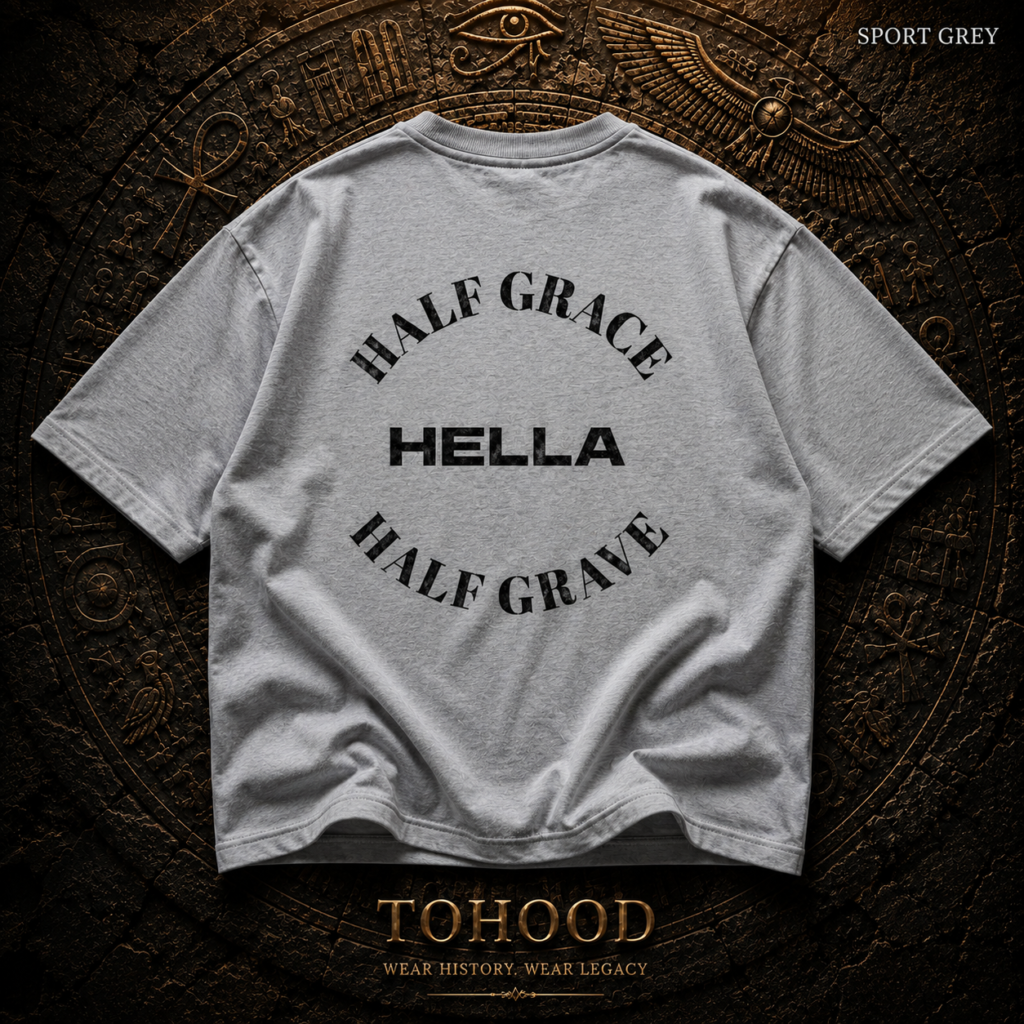
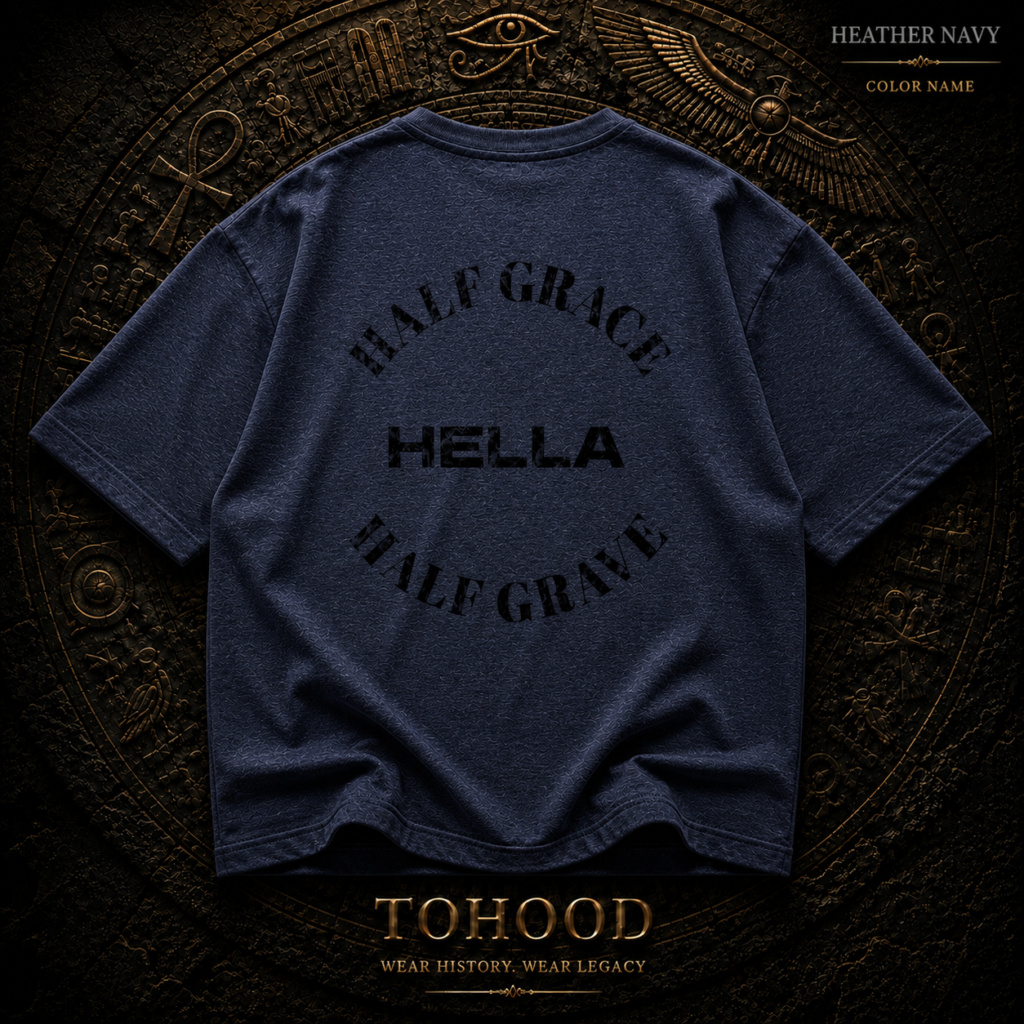
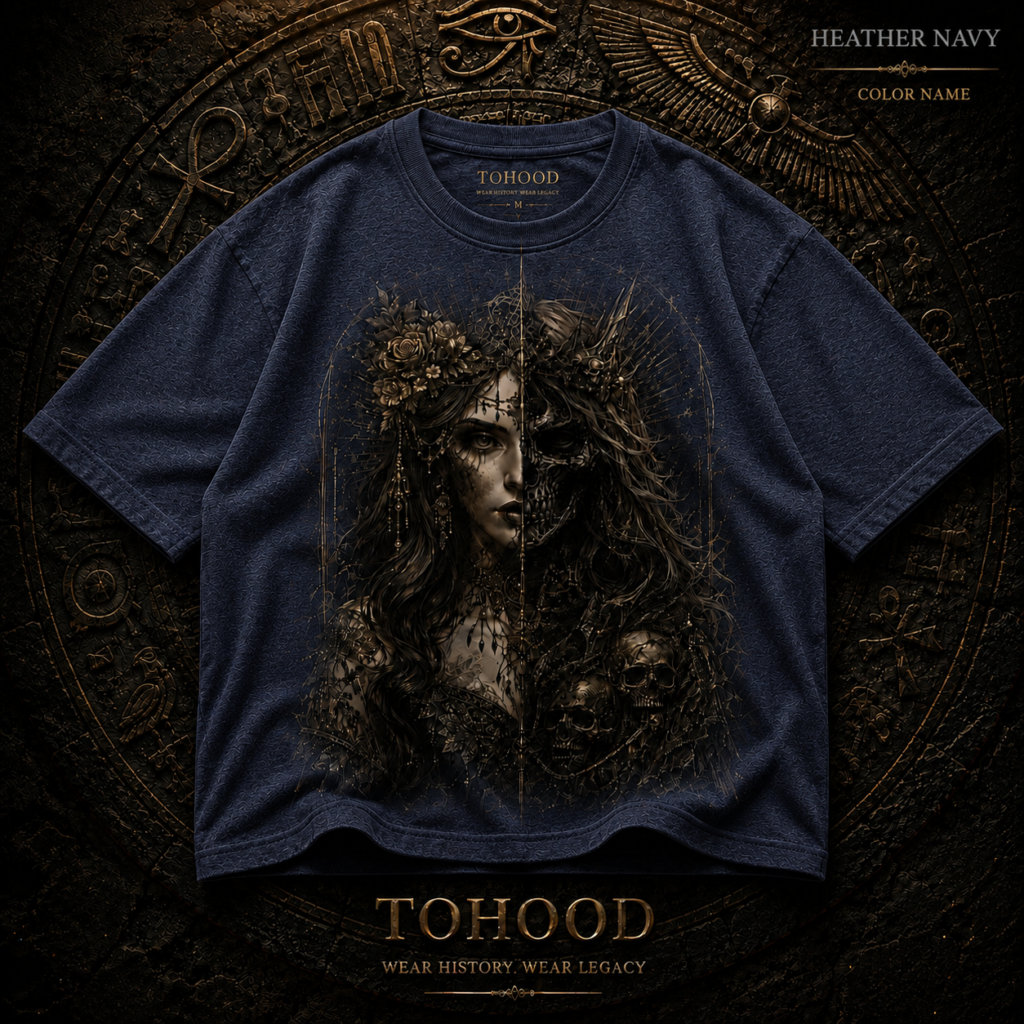
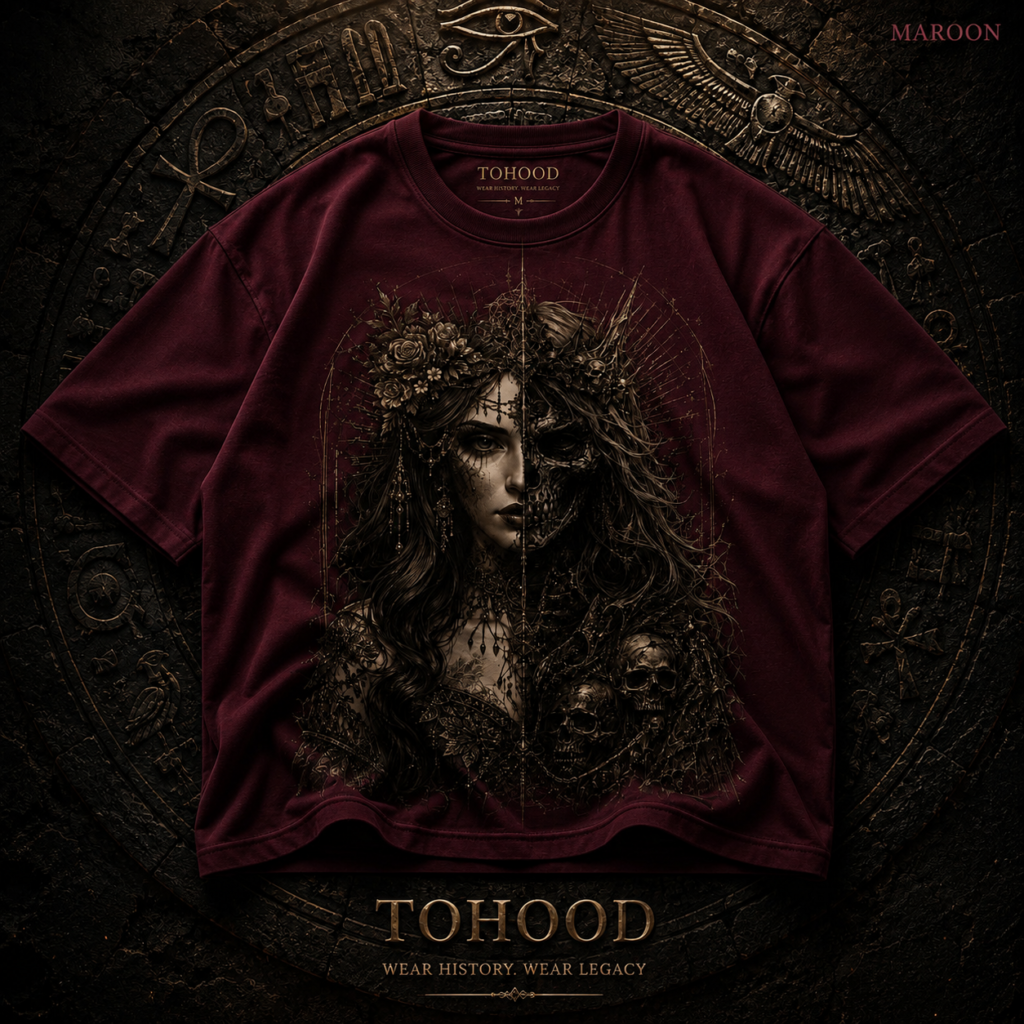
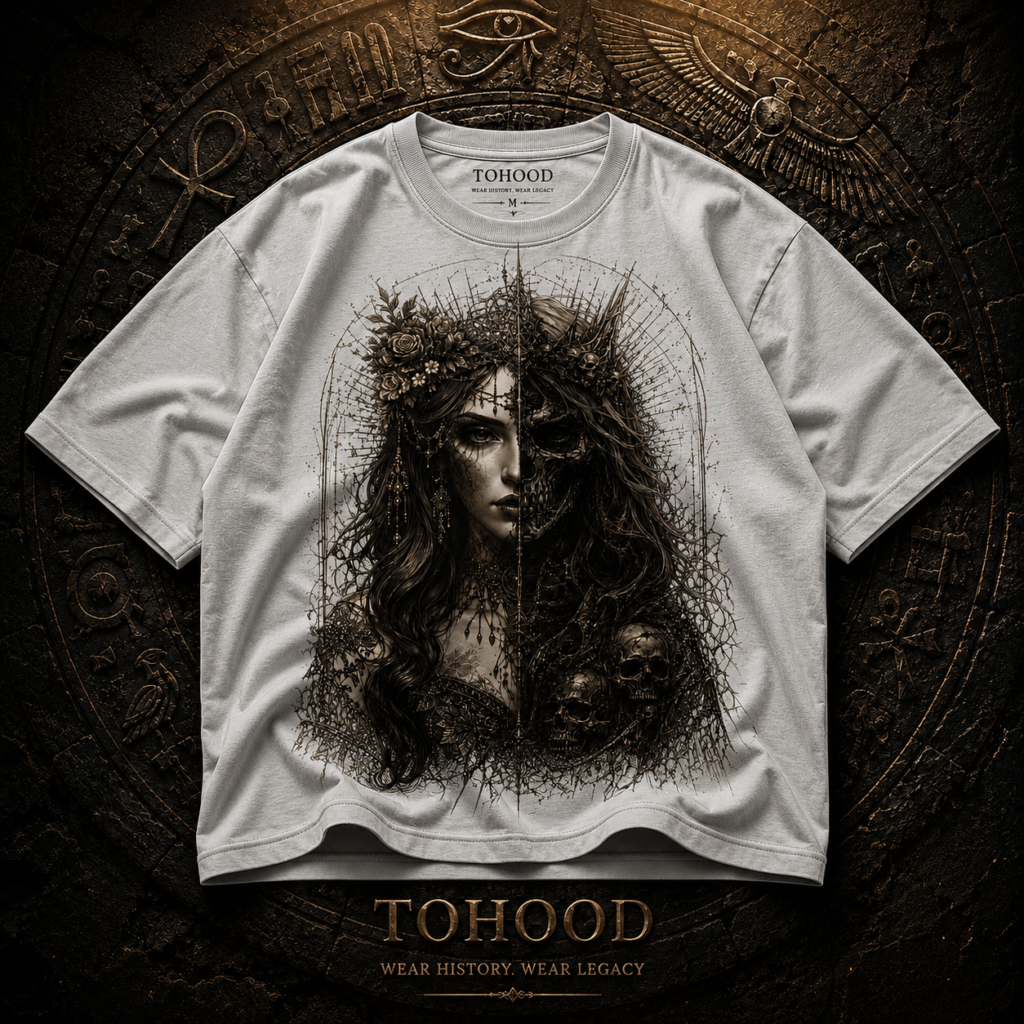
The Story Behind TOHOOD’s Transcendence Goddess Hoodie
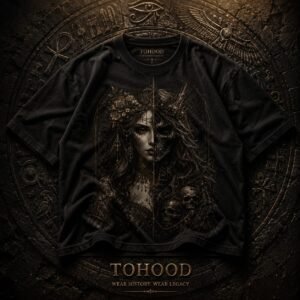
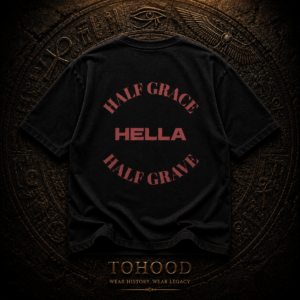
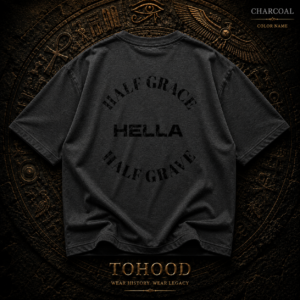
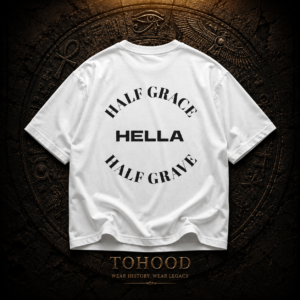
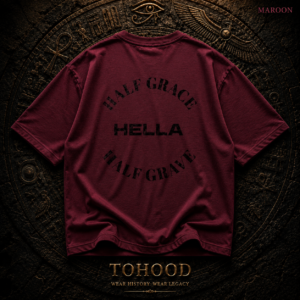
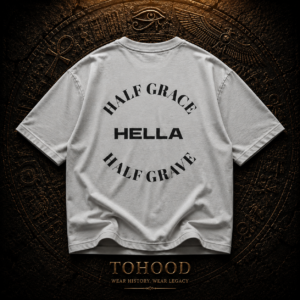
TOHOOD’s Transcendence Goddess Hoodie works within this modern symbolic space.
The central concept is transcendence.
To transcend is to move beyond an existing boundary.
Beyond limitation.
Beyond expectation.
Beyond an old identity.
The goddess figure therefore becomes less about representing one specific historical deity and more about the broader visual language of divine feminine power.
This is a contemporary interpretation.
It is not intended to claim that the design depicts a specific ancient goddess.
Instead, it draws from the visual vocabulary developed across thousands of years of mythology and art.
What Does Goddess Symbolism Mean Today?
For modern audiences, goddess imagery can represent:
- strength
- confidence
- independence
- beauty
- transformation
- creativity
- resilience
- mystery
- leadership
- self-expression
Different people will read the same image differently.
That is a strength rather than a weakness.
A powerful symbol doesn’t have to dictate one interpretation.
It can create a starting point for personal meaning.
Goddess Symbolism Across Cultures
It is useful to compare traditions, but we should never erase their differences.
Greek
Athena, Artemis, Aphrodite, Hecate, Demeter and others.
Egyptian
Isis, Sekhmet, Hathor, Bastet, Neith and others.
Mesopotamian
Inanna and Ishtar are particularly important examples.
Norse
Freyja is one of the best-known female deities associated with love, fertility, magic and warfare, among other attributes.
Roman
Venus, Minerva, Diana and other deities developed alongside Roman religious traditions.
Each tradition has its own history.
The similarities are interesting.
The differences are essential.
Why Ancient Goddess Imagery Still Matters
Ancient cultures created images of female divinity thousands of years ago.
Those images survived because they were powerful.
They represented things humans have always experienced:
birth
death
love
loss
war
beauty
power
change
fear
hope
Modern culture hasn’t stopped dealing with those experiences.
We simply express them differently.
That is why ancient goddess imagery can still feel contemporary.
The technology changes.
Human questions remain.
Frequently Asked Questions
What does goddess symbolism mean?
Goddess symbolism refers to the attributes, stories and visual symbols associated with female deities in different religious and mythological traditions. Meanings vary widely by culture.
What does the divine feminine mean?
“Divine feminine” is a modern umbrella concept often associated with qualities such as creation, intuition, transformation, strength and nurturing. It should not be treated as a single doctrine shared by all ancient cultures.
Who were the most powerful goddesses in mythology?
There is no objective ranking. Athena, Isis, Sekhmet, Inanna, Ishtar, Freyja, Artemis and many others held important and sometimes powerful roles within their respective religious traditions.
What goddess represents wisdom?
Athena is strongly associated with wisdom and strategic intelligence in Greek mythology.
What goddess represents war?
Several goddesses have associations with warfare. Athena is associated with strategic warfare, while Sekhmet has strong connections with destructive and protective power in Egyptian religion.
What goddess represents the moon?
Different traditions associated different deities with the moon. Selene was the Greek personification of the moon, while Artemis became strongly associated with lunar symbolism in later traditions.
What does a goddess symbolize in modern fashion?
Modern goddess imagery can symbolize confidence, beauty, independence, transformation, power and mystery. These interpretations are contemporary and should not automatically be presented as ancient meanings.
Is the “divine feminine” an ancient concept?
Not as one universal concept. Ancient cultures had many different female deities and religious traditions. The modern term “divine feminine” combines ideas from various traditions and contemporary spirituality.
Final Thought
The enduring power of goddess imagery isn’t simply about beauty.
It is about possibility.
Across different cultures and centuries, female deities have been imagined as warriors, mothers, rulers, lovers, protectors, healers, destroyers, creators and guardians of mysterious boundaries.
They have carried swords.
Held children.
Ridden animals.
Worn crowns.
Controlled storms.
Guarded the dead.
Protected kings.
Walked through the underworld.
And challenged the limits placed around them.
There is no single definition of the goddess.
And perhaps that is precisely the point.
A goddess can represent more than one thing.
She can be powerful and compassionate.
Beautiful and terrifying.
Creator and destroyer.
Human and divine.
Ancient and modern.
That tension is what makes the image endure.
Transcend the ordinary.
Explore the TOHOOD Transcendence Goddess Hoodie
Sources & Further Reading
- The Metropolitan Museum of Art — Greek and Roman Art
- The Metropolitan Museum of Art — Egyptian Art
- The British Museum — Ancient Egyptian collections
- Homeric Hymns
- Hesiod, Theogony
- Ovid, Metamorphoses
- Ancient Egyptian religious and funerary texts
- Scholarly studies of Greek, Roman and Egyptian religion
About the Author
TOHOOD Editorial Team
TOHOOD Editorial explores mythology, ancient cultures, symbolism, art and their influence on contemporary visual culture and fashion. Historical traditions are distinguished from modern interpretations, and articles are developed using museum collections, primary texts and established reference material where available.